
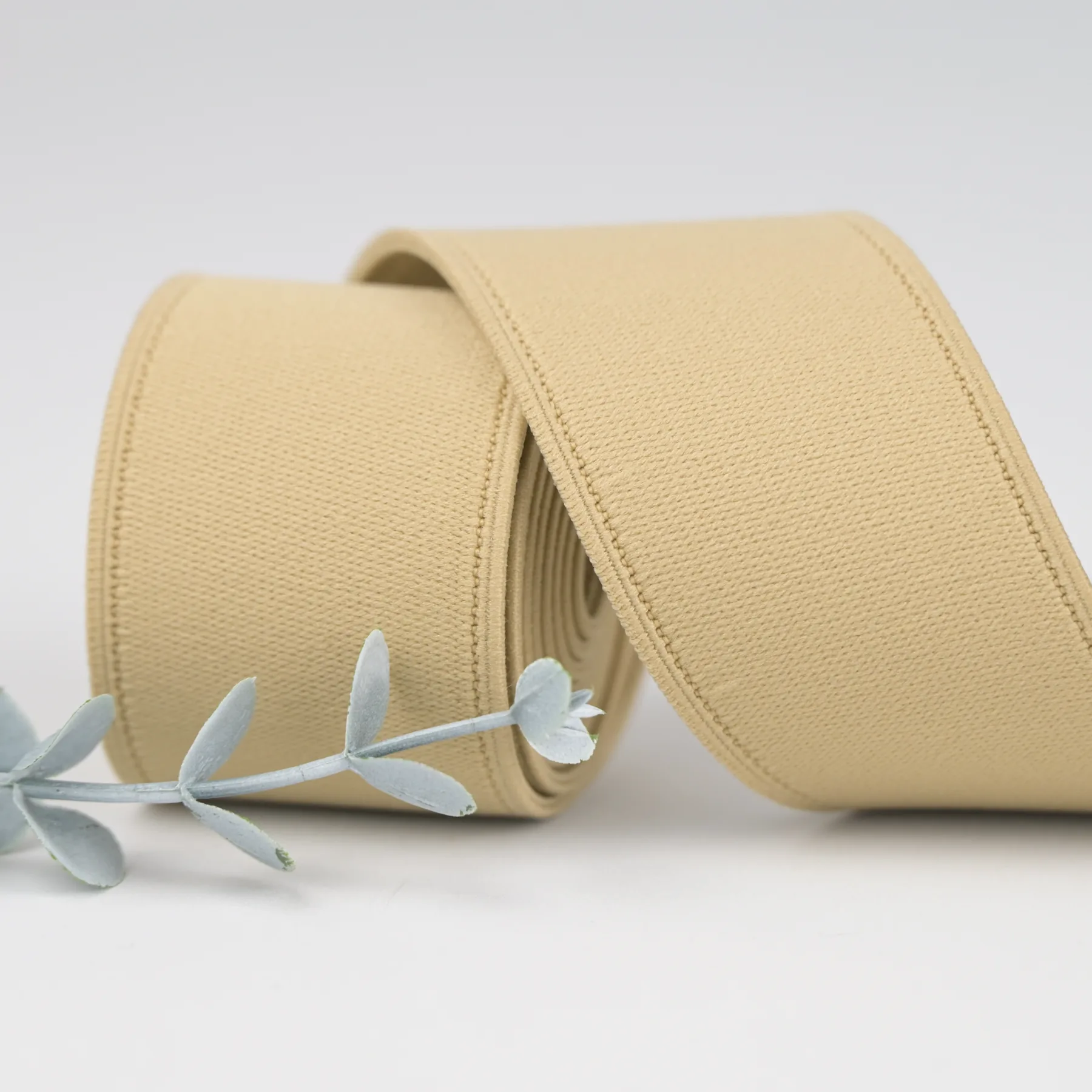
01Define the Garment Role Before Choosing the Rib
A neckband, cuff, waistband and hem insert may all be described as rib trim, yet each works in a different geometry. A neckband must turn around a curve and lie cleanly against the body. A cuff repeatedly passes over a hand or foot. A waistband may support a garment while being folded, joined or combined with another elastic element. Begin the sourcing brief with the exact location, shape, attachment and function rather than asking for a generic rib that matches a photograph.
Describe the finished garment and the cost of an unsuitable trim. Relevant risks may include a neckline that waves, a cuff that remains enlarged after dressing, a hem that twists, an edge that feels harsh, a shade that separates from the shell after washing or a seam that becomes bulky. Mark whether the trim is mainly decorative, shape-retaining, skin-contacting or structurally important to fit. This prioritises the checks that deserve a measurable method or a controlled wearer and sewing trial.
Send a dimensioned garment sketch and the actual shell fabric whenever possible because shell stretch, shrinkage and seam response influence the rib. State whether the trim arrives as continuous tape, cut pieces, circular bands or a pre-assembled component, and show its orientation and join position.
- Name the exact garment zone and whether the rib touches skin.
- Show the finished shape, fold, join, seam allowance and stretch direction.
- Describe dressing, movement, care and appearance risks.
02Specify Construction, Composition and Hand as a System
The word “rib” describes a family of knitted structures, not a complete product specification. Wale arrangement, yarn count, density, elastic yarn placement, plating, tubular or flat construction, finishing and heat setting can all change extension, recovery, thickness and surface. Two trims with the same nominal composition and visual rib spacing can perform differently. Record the construction proposed for the approved sample instead of treating composition as sufficient identity.
Composition choices should follow the garment’s required appearance, touch, dye route, care exposure and compliance needs. Cotton-rich, polyester-rich, polyamide-containing and blended constructions may each be appropriate in different products. An elastomeric component can support recovery, but its presence alone does not guarantee the desired force or long-term shape. Ask for declared composition and construction, then confirm the physical result through an agreed sample and method.
Hand feel needs a controlled vocabulary and a reference. Words such as soft, dry, compact, plush, smooth or firm are useful direction, but people interpret them differently. Identify the approved face and reverse, bend the rib in the intended fold, stretch it to the garment’s working range and assess the edge. Retain a protected physical reference. If a softer finish is requested, recheck recovery, sewing and care behaviour because a finish can improve touch while changing friction, appearance or dimensional response.
| Brief field | What to record | Why it matters |
|---|---|---|
| Construction | Rib arrangement, flat or tubular form, face and reverse | Controls appearance, fold, thickness and stretch direction |
| Composition | Declared fibre blend and any required documentation | Supports labelling, care planning and compliance review |
| Hand | Named attributes plus an approved physical reference | Reduces subjective interpretation between teams |
| Finish | Softening, brushing, heat setting or other declared process | May affect touch, friction, shade and recovery |
The appropriate construction is application-specific. Treat category tendencies as development direction, not guaranteed performance.
03Measure Extension, Force and Recovery Separately
A rib can extend far but still recover poorly, or it can resist extension too strongly for the intended opening. Extension describes how far a specimen reaches under a defined condition. Force describes the resistance at a chosen extension. Recovery describes its return after loading, holding, cycling and rest. These are separate questions, so a brief such as “good stretch” does not create a reproducible approval.
Write the method before testing. Identify specimen orientation and dimensions, gauge marks, conditioning, extension or load, rate, cycles, hold period, rest period and calculation. Standards can provide useful procedures, but scope matters. ASTM D2594 concerns low-power knitted fabrics and notes that other applications may require other methods. Confirm that the selected method suits the particular rib and document any modification.
Connect the material result to the garment. Record the cut length relative to the opening, seam type and application tension, then inspect the assembled component after repeated dressing or movement. A bench result does not capture curvature, seam restriction or the shell fabric. For a size range, validate representative garments because the working extension and pressure can change even when the nominal rib specification stays constant.
- Record extension, force and residual growth separately.
- State cycles, hold time, rest time and calculation with every result.
- Repeat the review in the sewn garment at its intended application ratio.
04Control Dimensions and Validate the Real Seam
Define finished width in the state in which the trim will be supplied: flat, folded, relaxed or under stated tension. Add thickness or mass only when it helps control fold bulk, sewing, appearance or repeatability. Because soft knits change with handling and atmosphere, record conditioning and measurement procedures instead of treating a single unconditioned reading as definitive.
Create the seam trial with the intended shell fabric, needle, thread, stitch, seam allowance, feed and production direction. Inspect for waviness, tunnelling, skipped stitches, needle damage, edge curl, grin-through and recovery after the seam is extended. A trim that looks balanced as a loose swatch may become too firm when several layers are folded into a seam, while a soft construction may spread or distort under the presser foot.
Document face orientation, wale direction, fold method and join placement. If the rib is supplied as cut bands, show the cut-length datum and whether ends are sewn, linked or otherwise assembled. For continuous material, define roll identification, joins and relaxation before cutting where relevant. These instructions make the approved sample reproducible for both the trim supplier and the garment factory.
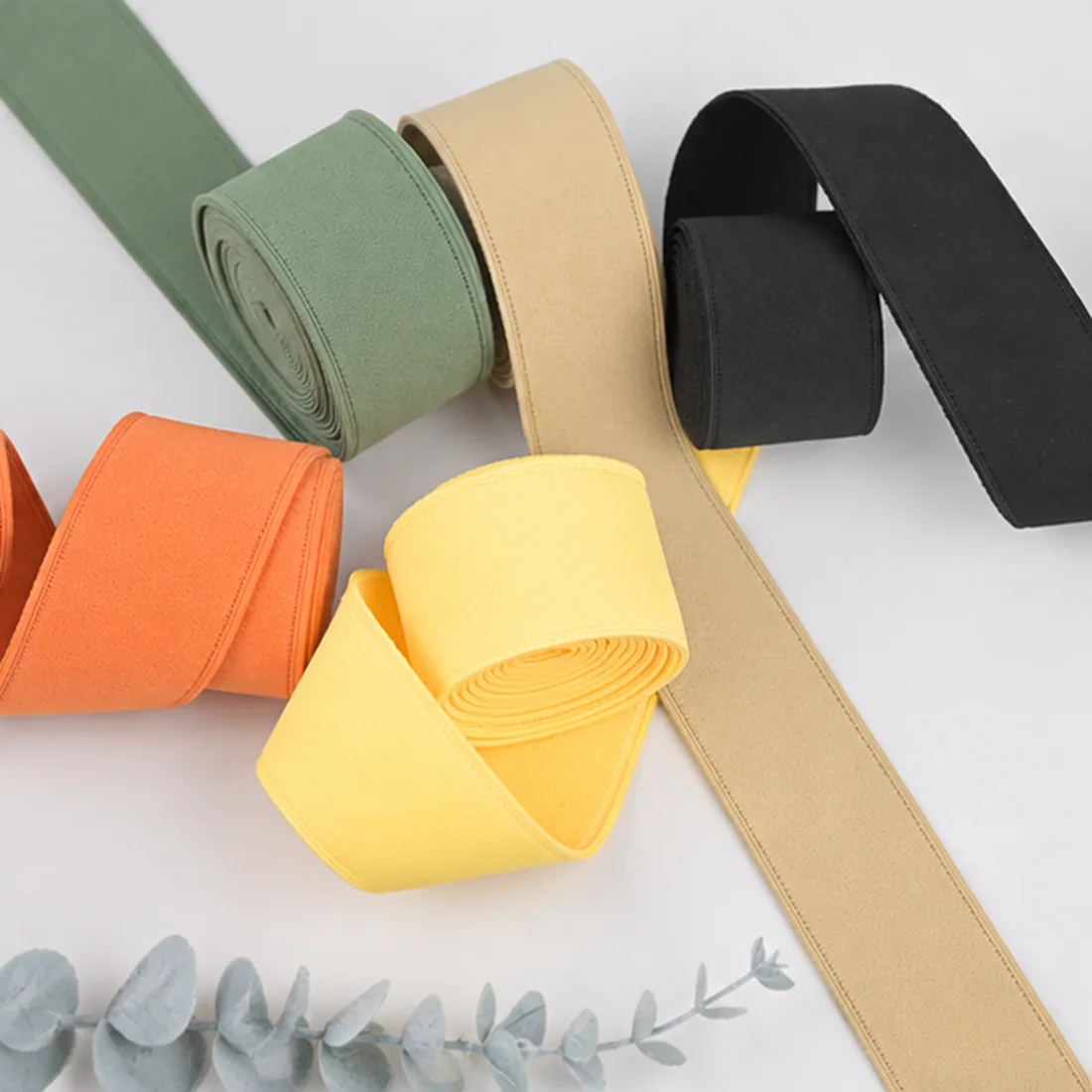
05Separate Shade Approval From Colourfastness
Initial shade matching and colourfastness answer different questions. A lab dip or knitted sample can match the approved colour under agreed lighting yet still transfer or change during use and care. Conversely, a highly stable shade may not match the shell fabric. Give each approval its own record: colour target and viewing conditions for shade, then relevant exposure methods and acceptance criteria for fastness.
Texture makes rib colour comparison difficult because raised wales create highlight and shadow. Compare specimens in the same orientation, conditioned state and light source, and decide whether the target is a physical shell fabric, a recognised colour reference or another approved trim. If the rib and shell use different fibres or dye routes, a perfect match under one light source may separate under another. Review the complete garment where colour harmony is critical.
Select fastness exposures from the actual product: rubbing for contact and colour transfer, laundering for the care label, perspiration for relevant skin-contact garments, or light where extended exposure is foreseeable. ISO 105-X12 describes a method for colourfastness to dry and wet rubbing. It does not set the grade a buyer must accept. State the specimen, adjacent material, method edition, rating scale and buyer limit in the test plan.
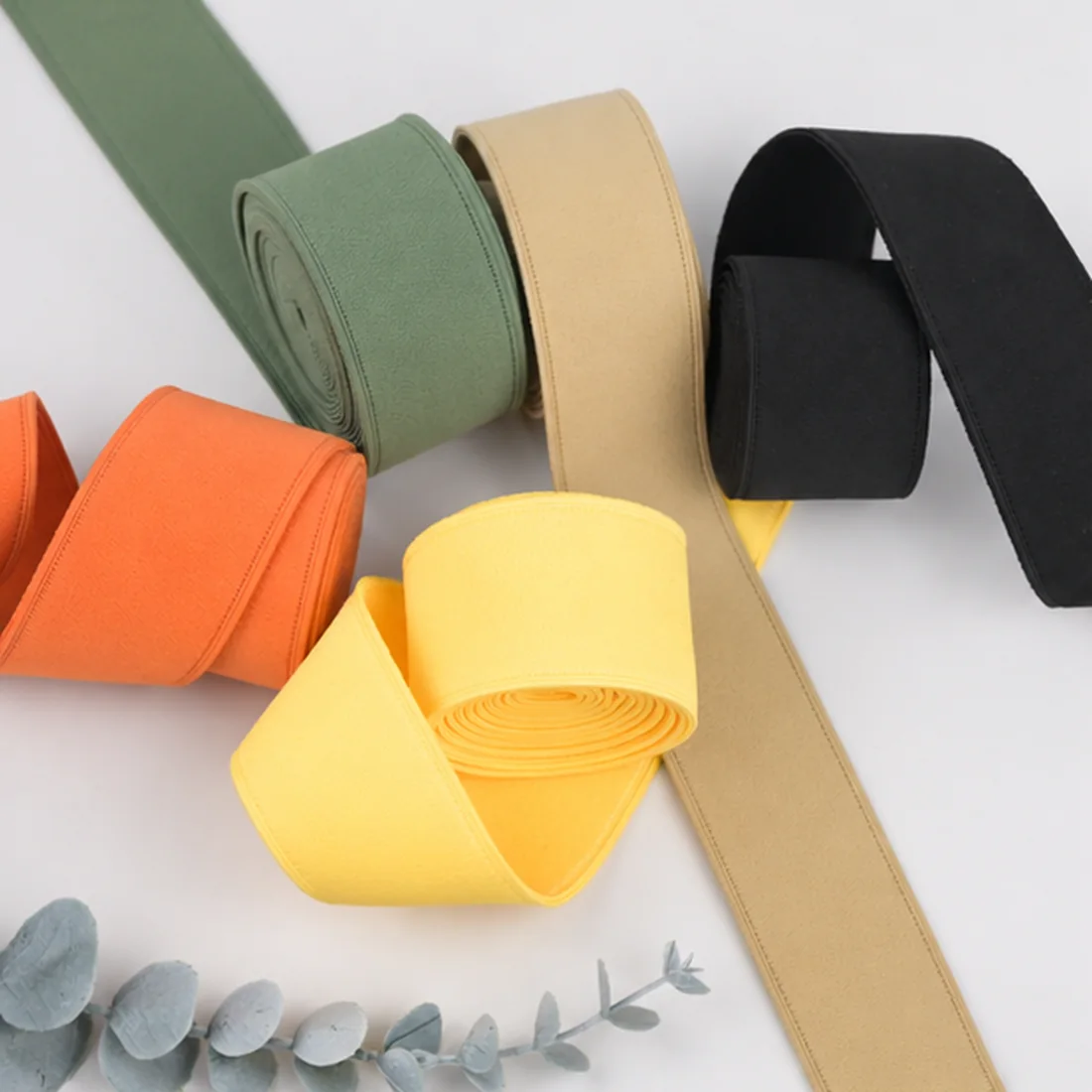
06Build Wash Testing Around the Intended Care Label
Wash testing should reproduce the relevant care route rather than use the vague claim “washable.” Define washing procedure, detergent, ballast, temperature, drying route, number of cycles and specimen form. ISO 6330 provides domestic washing and drying procedures for textile testing, while ISO 5077 covers determining dimensional change after appropriate washing and drying. The purchase specification must still identify the selected procedure and the acceptable result for the actual garment.
Test the loose rib to understand its own dimensional response, and test the assembled garment to see interactions with the shell and seam. Measure length and width from stable marks, record twist, spirality, edge curl, surface change, shade and hand, and allow the agreed conditioning or relaxation before final measurement. A small difference between rib and shell shrinkage can become visible waviness or gathering around a neckline or hem.
Do not approve from the best-looking specimen alone. Use identified samples from the proposed construction and record the sample count, initial dimensions and any exclusions. If the care route changes, repeat the relevant assessment. A development sample washed by a different machine, detergent or drying method cannot automatically validate the production care claim.
| Wash review | Loose trim question | Garment-level question |
|---|---|---|
| Dimensions | How do length and width change after the selected procedure? | Does differential change create wave, gathering or distortion? |
| Recovery | Does residual growth change after care and conditioning? | Does the opening retain the intended fit after use and care? |
| Appearance | Do edge, surface, hand or shade change? | Does the trim remain visually compatible with shell and seam? |
| Colour transfer | Does the trim stain an agreed adjacent material? | Is transfer visible on the actual shell, lining or other components? |
Specify the procedure and acceptance criteria for the intended product. A generic number of wash cycles is not a universal proof of fitness.
07Use a Supplier-Ready Sampling and Approval Plan
Issue one brief that links the garment sketch, shell fabric, rib specification, colour target, care label and required evidence. If a field is not decided, label it as open and request a documented recommendation. Ask each proposal to identify composition, construction, dimensions, finish and known deviations so competing samples are not evaluated as if they were identical.
Approve in stages where useful: construction and hand, colour, sewn garment, then care and performance evidence. Give every physical sample a code and date and state what that approval covers. A message saying “rib approved” is risky when shade, recovery or wash response remains open. Retain the final sample and measurement record together, and require notification before changes that could affect the approved outcome.
A concise scorecard can include appearance, dimensions, composition, hand, edge, extension method, force, recovery, seam behaviour, colour, fastness, dimensional change, packing and documentation. The goal is not to request every available test. It is to make the few product-critical decisions visible before purchase and repeatable across later orders.
- Garment location, function, shell fabric and technical drawing.
- Composition, knit construction, face, reverse, edge and finish.
- Extension, force and recovery method with application-specific limits.
- Hand reference, colour target, viewing conditions and fastness plan.
- Sewing setup, application ratio, sample sizes and wear review.
- Care procedure, drying route, cycles, measurements and approval record.
08Frequently Asked Questions
What information should a rib knit trim RFQ include?
Include the garment location, function, shell fabric, technical drawing, supplied form, composition direction, knit structure, dimensions, stretch direction, hand reference, colour target, care label, sewing method, quantity and approval tests. Mark undecided fields as requests for supplier recommendation.
How should rib trim recovery be tested?
Agree a written method covering specimen orientation, dimensions, conditioning, extension or load, rate, cycles, hold and rest times, and the recovery calculation. Then verify the sewn garment, because curvature, shell fabric and seam restriction affect the working result.
Can I approve rib trim from composition and a colour photo?
No. Composition does not fully define structure, hand or recovery, and a photograph is not a reliable colour or tactile reference. Approve an identified physical sample with documented construction, measurement, colour-viewing and garment-trial conditions.
Should rib trim be washed separately or in the garment?
Both can be useful. A loose-trim test helps isolate dimensional, colour and surface behaviour, while a garment test reveals differential shrinkage, seam effects and visual distortion. Choose the combination that addresses the product’s actual risks.
Does an ISO or ASTM method define the correct acceptance limit?
Usually the method explains how to prepare, expose or measure a specimen. The buyer and supplier still need to agree the method edition, any modifications, sampling and product-specific acceptance criteria. Confirm that the method scope suits the trim.
09Sources & further reading
Sources support the principles discussed; the final specification and test plan must follow the application and buyer requirements.
- ASTM D2594/D2594M-21 — Stretch Properties of Knitted Fabrics Having Low PowerASTM International
- ISO 6330:2021 — Domestic washing and drying procedures for textile testingInternational Organization for Standardization
- ISO 5077:2007 — Determination of dimensional change in washing and dryingInternational Organization for Standardization
- ISO 105-X12:2016 — Colour fastness to rubbingInternational Organization for Standardization