
01Define the Garment Zone and the Job the Elastic Must Do
“Elastic for underwear” is not a complete specification. A soft exposed waistband, a plush-backed lingerie elastic, a narrow fold-over edge, a concealed waist elastic and a high-tension sports bra component serve different functions. Begin with the body zone, garment construction and how the elastic is installed. State whether it is visible, folded, enclosed, stitched through, bonded or attached under tension. Note where seams, labels, hardware or printed graphics will interact with it.
Next describe the fit intent. Is the elastic expected to hold a garment securely during movement, create light shaping, stabilize an opening or simply help the edge return? A waistband may feel comfortable when stretched once by hand yet roll, narrow, twist or lose recovery after repeated wear. A bra or performance garment can concentrate pressure if the width, edge or extension is wrong. The technical discussion should therefore connect elastic force and extension to the pattern, garment circumference and intended user experience.
Provide a reference garment or physical elastic when possible, but explain what you like and dislike about it. “Match this sample” can hide uncertainty about composition, age, laundering and original performance. Mark whether the target is softness, rebound, surface, colour, width, visual branding or a combination. If the reference is worn, it may show the failure you want to prevent rather than the new-product standard.
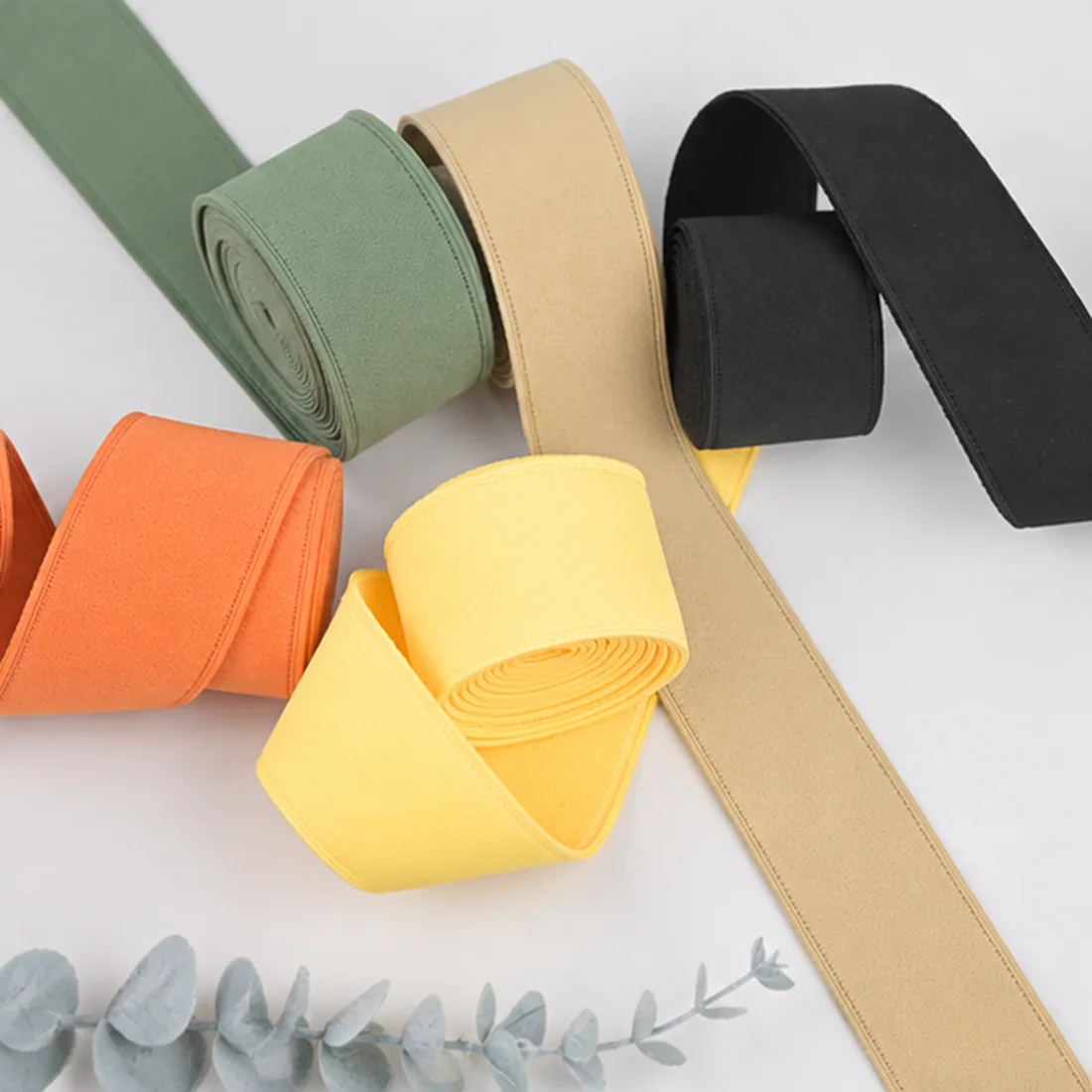
- Identify the body zone, garment type and whether the elastic touches skin.
- Describe whether the elastic is exposed, enclosed, folded, bonded or stitched under extension.
- State the intended support and fit rather than requesting “strong” or “soft” elastic.
- Explain which attributes of a reference sample must be matched and which can be improved.
02Choose Construction and Material as a System
Woven, knitted and braided elastics behave differently because yarn path, elastic element, density, width and finishing work together. Woven elastic is often selected where a stable, structured band and a clean exposed appearance are useful. Knitted elastic can provide a softer, lighter character for many garment applications. Braided elastic may narrow more noticeably when extended and is often used in narrower channels. These are broad tendencies, not guarantees; compare the actual construction supplied.
Composition also affects touch, appearance, moisture response, heat exposure, dyeing route and care behavior. Polyester, polyamide, cotton or other cover yarns may be combined with elastomeric components. A composition label alone cannot predict comfort or recovery because yarn size, knitting or weaving structure, finishing and elastic percentage all matter. Ask for declared composition, but approve the physical product and relevant test results rather than selecting only from a fibre name.
For skin contact, inspect both faces and both edges. A visually attractive front can hide a rough back or protruding edge yarn. Plush, brushed or soft-touch constructions may improve perceived comfort, while a compact edge can reduce fraying or curling. Finishes can change hand feel, friction and sewing response, so confirm that the production finish matches the sample. If restricted substances or product certification are required, specify the exact program, product class, buyer protocol and documentation expected.
| Construction direction | Typical sourcing reason | What must be checked on the actual sample |
|---|---|---|
| Woven elastic | Structured appearance, dimensional stability and branded designs | Force, edge pressure, thickness, logo distortion and wash behavior |
| Knitted elastic | Soft or lightweight garment applications and flexible hand | Recovery, narrowing, edge curl, sewing stretch and long-term shape |
| Braided elastic | Narrow channels or applications accepting more width change | Narrowing under extension, twist, channel movement and seam compatibility |
| Plush or skin-contact face | Reduced surface harshness against the body | Correct face orientation, edge feel, pilling and care durability |
These are category-level tendencies. Construction, yarn, finish and dimensions must be evaluated together on the supplied elastic.
03Specify Stretch, Force and Recovery Separately
Stretch, elastic force and recovery are related but not interchangeable. Stretch describes how far a specimen extends under a defined condition. Force describes the resistance at a specified extension. Recovery describes how closely the specimen returns after extension and time. Two elastics can reach the same length but feel very different because their force-extension curves differ. A band can also feel strong initially yet retain permanent growth after repeated cycles.
Avoid specifying “stretch 2×” without a method. Define the original gauge length, extension rate, number of cycles, holding time, conditioning, measurement delay and calculation. If a buyer standard or recognized test method applies, cite the edition and any modifications. For product development, a comparative internal method can be useful, but it should be written clearly enough that buyer and supplier can reproduce it. Record both the raw elastic result and the behavior after sewing where the seam materially changes extension.
Translate the laboratory or bench target into garment fit. Patternmakers often apply elastic at a length shorter than the garment opening, creating an application ratio. That ratio interacts with elastic force, fabric stretch and seam construction. A ratio that works for one elastic may create pressure, gathering or poor recovery with another. Develop and wear-evaluate the complete garment across relevant sizes instead of assuming one material result automatically produces the desired fit.
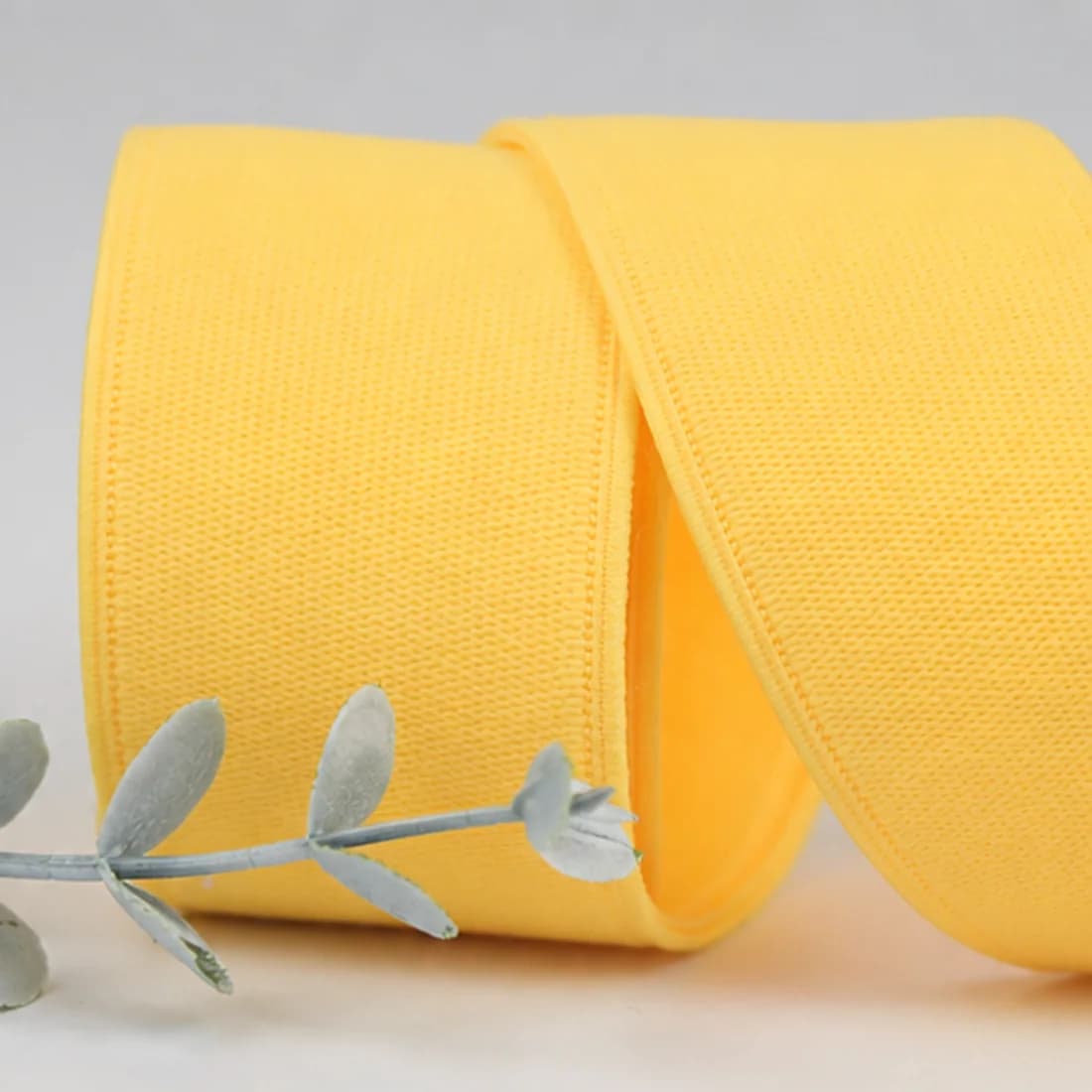
- State extension or elongation with a defined method and gauge length.
- Record force at a meaningful extension rather than relying on hand feel alone.
- Measure recovery after controlled cycles and an agreed rest period.
- Recheck the finished seam and garment because sewing and application ratio change performance.
04Engineer Comfort Through Width, Surface and Edge Pressure
Comfort is a system outcome. A wider elastic can distribute force across more skin area, but width alone does not guarantee comfort. Surface texture, edge firmness, seam bulk, application tension, garment pattern and body movement all contribute. Inspect the band flat, bent and extended. Some edges become noticeably firmer under extension; some constructions roll when curved around the body; some surfaces increase friction when damp.
For exposed waistbands, assess the reverse face as carefully as the branded face. Check floats, joins, logo yarns and finishing. For lingerie edges, look for consistent scallops or plush contact areas and verify how the tape turns around curves. For sportswear, consider sweat, repeated movement and pressure under layered clothing or equipment. Use wear trials that reflect real duration and activity, and capture structured feedback instead of asking testers only whether the garment is “comfortable.”
A useful comfort review records pressure points, edge marks, itch, heat, rolling, migration, seam irritation and recovery after wear. Evaluate representative sizes and bodies because the extension applied to the elastic changes across the size range. If the elastic carries a printed or woven brand mark, confirm that the graphic remains acceptable at normal wearing extension and that inks or surface treatments do not create a harsh contact area.
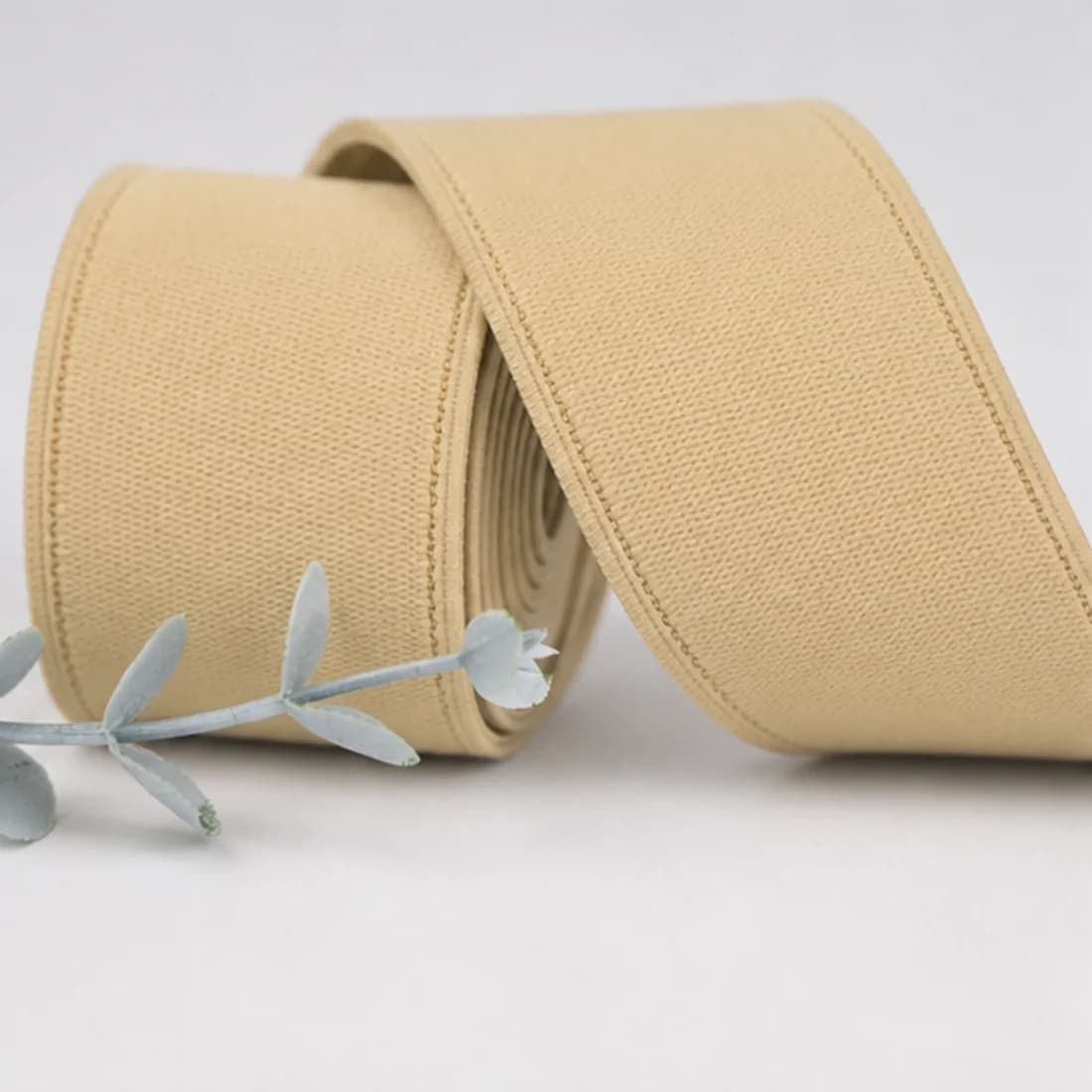
05Validate Sewing, Bonding and Garment Assembly
Elastic can pass a material review and still fail during assembly. Needle size, point, thread, stitch type, stitch density, presser-foot pressure and feed settings affect damage, skipped stitches, tunnelling, seam extension and appearance. Sewing under too much or uneven tension can create wavy edges and inconsistent fit. A thick waistband may exceed the capability of a planned folding or attachment operation. Include production engineering early rather than treating sewing as a separate downstream issue.
Run a seam trial using the actual shell fabric, lining and thread. Stretch the seam through the intended range and inspect for broken stitches, needle cutting, visible holes, edge distortion and recovery. Wash the assembly before approval if the care cycle can alter shrinkage or surface. If bonding or heat application is involved, confirm temperature, pressure, dwell time and material compatibility. Heat can affect elastomeric components even when the surface initially appears unchanged.
Document orientation and application ratio on the garment specification. Reversible-looking elastics may have a preferred skin face or edge direction. Branded bands need logo alignment and join placement rules. Enclosed elastics require control of twist and overlap. These are not minor workmanship details: they determine whether the approved material delivers the intended experience in bulk garments.
- Create the trial with production fabric, thread, stitch and machinery settings.
- Inspect seam extension, stitch integrity, wave, needle damage and recovery.
- Confirm face orientation, join location, logo placement and application ratio.
- Re-evaluate after relevant wash, heat or bonding exposure.
06Build a Care and Durability Test Plan
The test plan should come from the product claim, care label, target market and known failure risks. Common evaluation areas include dimensional change, appearance after laundering, colourfastness, stretch and recovery retention, seam performance, pilling or abrasion, perspiration exposure and restricted substances. Not every product needs every test. A fashionable bralette, reusable swim garment and high-support training product have different exposure and risk profiles.
Define the method, number of cycles, detergent, temperature, drying route, specimen preparation and acceptance limit. “Wash tested” is not a result. Ask whether the elastic is tested separately, sewn to fabric or evaluated in the complete garment. Separate testing helps diagnose material behavior, while garment testing captures interactions. For critical attributes, both may be appropriate. External laboratory work should identify the sample revision so results cannot be incorrectly applied to a later construction.
Human and ecological requirements also need exact scope. OEKO-TEX STANDARD 100, for example, is a testing and certification system for harmful substances with requirements that vary by product class. A supplier saying it uses certified material is not the same as the final product being certified. Confirm certificate validity, product coverage and any buyer documentation required. For recycled or organic claims, follow the applicable chain-of-custody and transaction requirements rather than relying on a generic marketing statement.
| Risk area | Evaluation question | Define before testing |
|---|---|---|
| Recovery | Does the band retain fit after repeated extension and care? | Cycle, extension, rest time and acceptable residual growth |
| Colour | Will shade transfer, fade or change in expected exposure? | Method, adjacent fabrics, grade and viewing conditions |
| Surface | Will pilling, abrasion or edge damage affect comfort or appearance? | Contact material, cycles, pressure and acceptance reference |
| Garment seam | Does the assembled edge extend and recover without damage? | Fabric, stitch, application ratio, direction and evaluation points |
| Chemical requirements | Which market, buyer or certification rules apply? | Exact standard, product class, scope and required documentation |
07Approve Samples With a Garment-Focused Scorecard
Build the scorecard before comparing suppliers. Include declared composition, construction, width, thickness or weight if useful, colour, surface, edge, stretch method, force target, recovery, wash result, seam result, logo and packaging. Mark each field as required, target range, visual reference or open for recommendation. This avoids the common situation in which buyers select the most attractive swatch and discover later that the commercial sample was never evaluated for the intended garment.
Condition specimens consistently before measurement and use the same equipment and technique. Textile results can vary with temperature, humidity, speed and operator method. Retain an approved sample protected from light, contamination and excessive tension. Photographs are helpful records but do not replace the physical reference for hand feel, colour and thickness. Give the approved sample and specification the same revision identity.
When a result misses the target, change one variable at a time where possible. Increasing elastic force, changing width, altering construction or revising application ratio may all affect fit, comfort and price. A controlled development log helps the team understand why the final sample was chosen. It also makes future repeat orders and problem solving faster because the rejected routes and trade-offs remain visible.
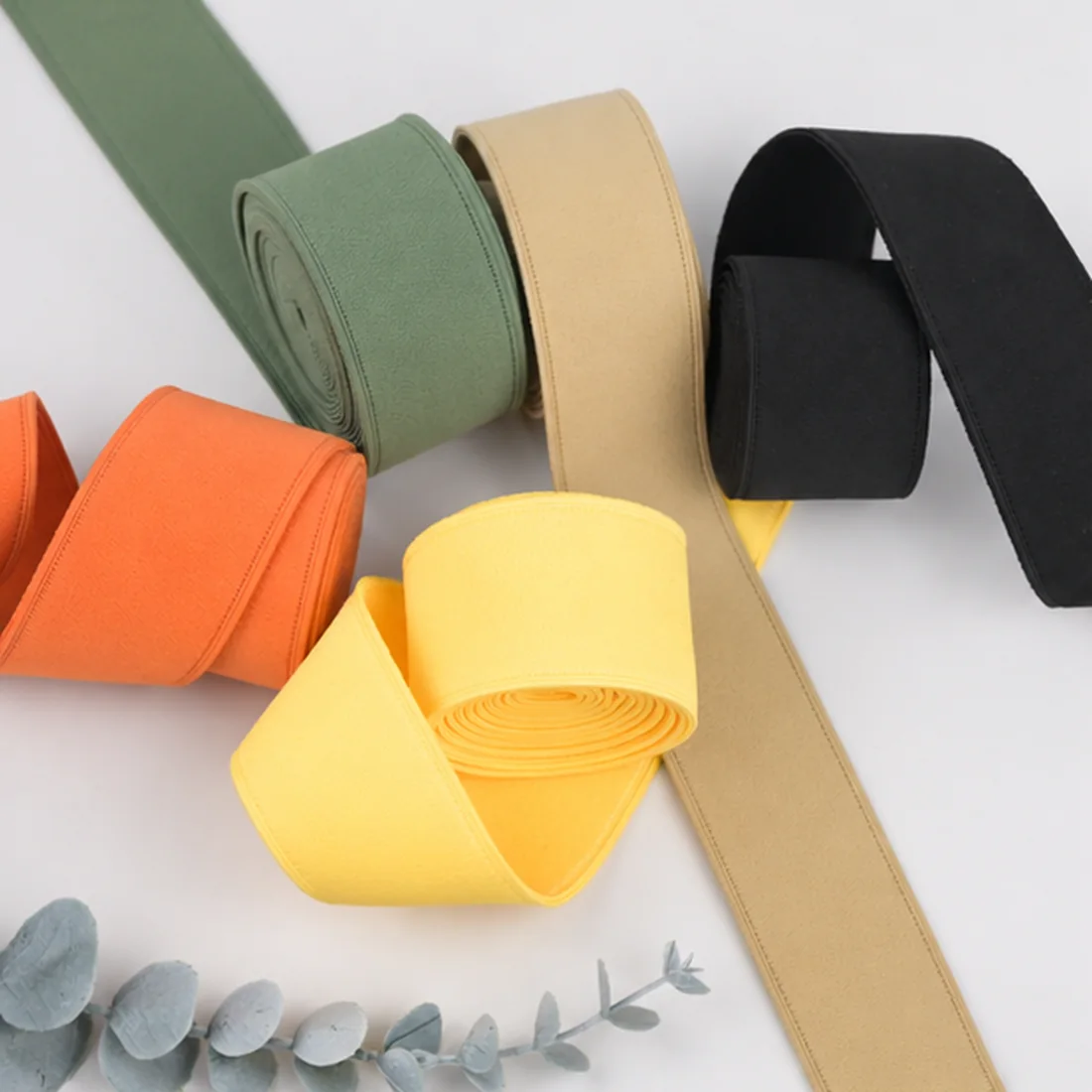
08Elastic RFQ Checklist for Underwear and Sportswear Buyers
A useful RFQ allows the supplier to identify missing decisions and quote the same project you intend to sample. If a field is unknown, label it “supplier recommendation requested” rather than leaving it blank. Provide photographs for context but attach dimensioned drawings, artwork and physical references where accuracy matters. Ask the supplier to repeat the proposed specification in the quotation so misunderstandings are visible before payment or sampling.
Do not lock the commercial order before technical assumptions are aligned. A preliminary price range can guide development, but the final quotation should reference the approved construction or sample revision and state testing, packing and delivery assumptions. For repeat programs, add acceptable lot-to-lot variation and change-notification requirements. This turns a soft product conversation into a controllable purchase specification.
- Garment type, body zone, target customer and skin-contact status.
- Exposed, enclosed, fold-over, binding, strap or other installation method.
- Construction and composition preference, or request for alternatives.
- Width, thickness or weight direction, colour and visual finish.
- Target extension, force and recovery with measurement method.
- Application ratio, sewing or bonding route and actual garment fabric.
- Care label, expected wear conditions and required test plan.
- Artwork, logo repeat, face/reverse orientation and placement.
- Quantity by colour and size program, packing, destination and timing.
- Required certificates, chemical protocols and order-level documents.
09Frequently Asked Questions
What is the best elastic for underwear waistbands?
There is no single best type. The correct choice depends on whether the band is exposed or enclosed, desired support, skin-contact surface, width, application ratio, sewing method and care cycle. Compare actual constructions in a representative garment and approve measurable recovery and comfort criteria.
How much should waistband elastic stretch?
Specify stretch with a method rather than a universal percentage. Define gauge length, applied force or extension, cycling, hold time and recovery measurement. Then validate the application ratio and fit in the complete garment across relevant sizes.
Is woven elastic better than knitted elastic?
Neither is universally better. Woven elastic often offers a structured, stable appearance, while knitted constructions can provide softer or lighter options. Yarn, density, width, finish and elastic element can change those tendencies, so test the supplied sample for the intended garment.
How do I test elastic recovery?
Use an agreed method that records original length, controlled extension, number of cycles, hold and rest times, then measures residual growth or returned length. For garments, also test the sewn assembly because stitch and application tension affect recovery.
Does OEKO-TEX certification mean every elastic is certified?
No. Verify the certificate owner, validity, product class and product scope. A certified yarn or component does not automatically make every final elastic or garment certified. Align documentation with the specific buyer and order requirement.
10Sources & further reading
Sources support the principles discussed; the final specification and test plan must follow the application and buyer requirements.
- OEKO-TEX STANDARD 100OEKO-TEX
- Textiles — Determination of the elasticity of fabricsInternational Organization for Standardization
- AATCC test methods and evaluation proceduresAATCC
- Global Organic Textile Standard, current standard resourcesGlobal Standard
- Global Recycled StandardTextile Exchange