
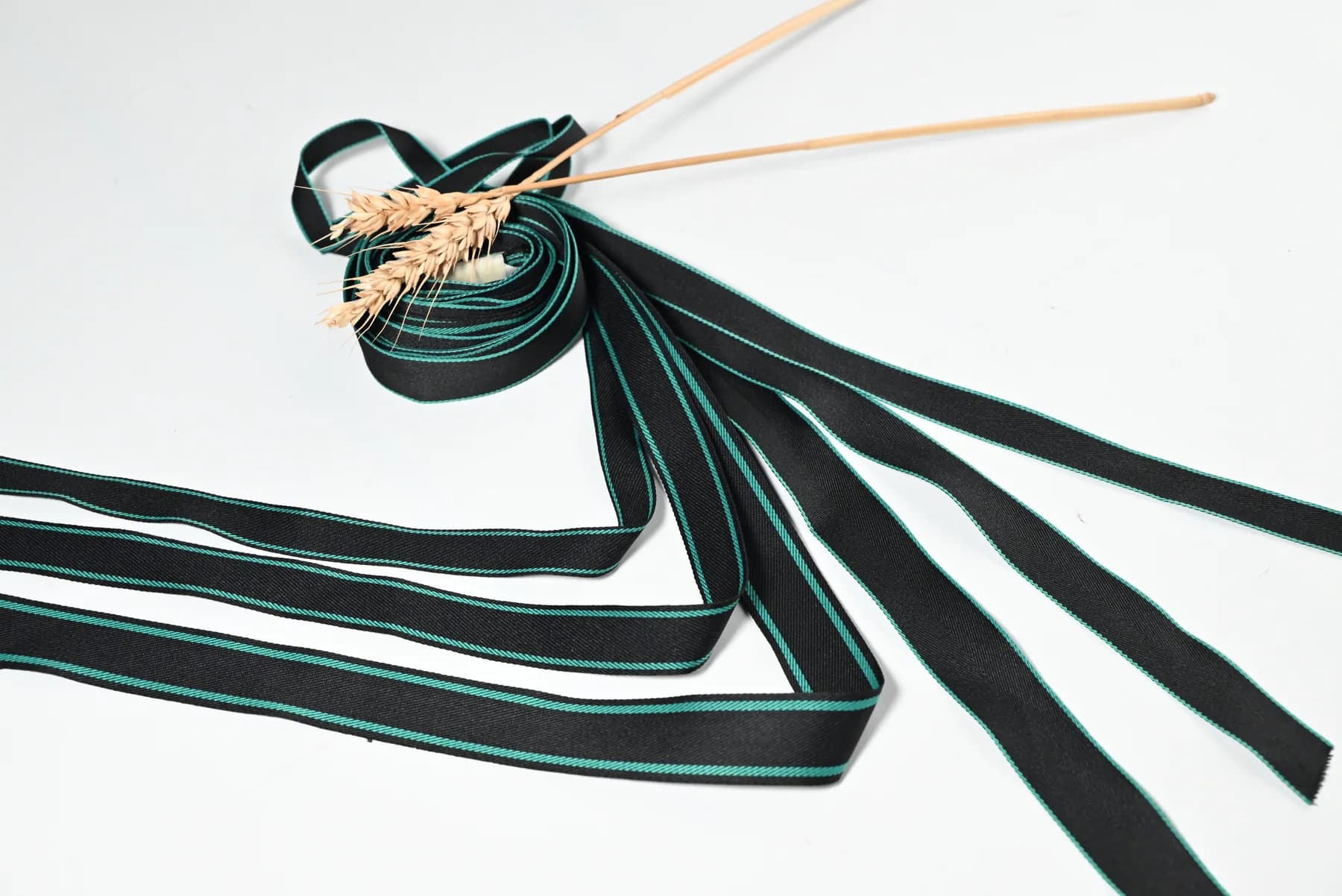
01Start With the Finished Product, Not the Logo
Jacquard webbing combines branding with textile function, so the best starting point is the finished product rather than the artwork file. A logo tape on a jacket facing, a bag strap, a footwear pull tab and a waistband detail may use the same visual identity but face different bending, sewing, washing, abrasion, skin-contact and hardware conditions. Tell the supplier where the webbing sits, which side is visible, how it is assembled and what the user will do with it.
Classify the component as decorative, functional, structural or brand-critical. This changes the approval emphasis. A decorative trim may prioritize logo readability, shade and hand. A functional loop may also require dimensional stability, seam compatibility and a product-level load assessment. Avoid assuming that the word “jacquard” proves any performance property: the finished result depends on fibre, yarn, weave, density, edge and finishing as well as the woven design.
List the foreseeable exposure without turning every possibility into a requirement. Relevant factors may include washing, perspiration, moisture, sunlight, repeated flexing, rubbing against another material, metal hardware and direct skin contact. Then mark each requirement as fixed, preferred or open to supplier recommendation. This gives the supplier room to propose a workable construction while protecting the items that are essential to the brand or application.
- Name the finished product and exact webbing position.
- Show sewing, folding, threading, bonding and hardware contact.
- State whether the webbing is decorative, functional, structural or brand-critical.
- Separate fixed requirements from preferences and open technical choices.
02Select Material and Hand as a System
Polyester, nylon, cotton and recycled-content options can all be used in narrow woven products, but fibre name alone does not define a jacquard tape. Yarn form, yarn size, weave, density, heat setting, dyeing and finishing influence softness, sheen, edge firmness, logo definition and behaviour in the finished assembly. Compare documented constructions as physical samples rather than choosing from fibre labels or screen photographs alone.
Describe the hand in application language. Terms such as soft, dry, crisp, smooth or substantial are useful directions, but they are subjective until compared against a reference. If the tape touches skin, fold it and place it in the intended garment zone. If it passes through hardware, test the exact buckle or adjuster. If it is sewn onto a light fabric, make a seam trial and check puckering, edge lift and distortion after the intended care process.
If recycled content or chemical-safety documentation is required, name the exact programme and product scope. OEKO-TEX STANDARD 100 addresses testing textiles for harmful substances. Textile Exchange standards such as RCS and GRS address verified recycled input and chain-of-custody requirements. These are different forms of evidence. Ask which certified organization, site and product scope apply, and what transaction or supporting documents are expected for the order.
03Define Width, Thickness, Repeat, Face and Edge
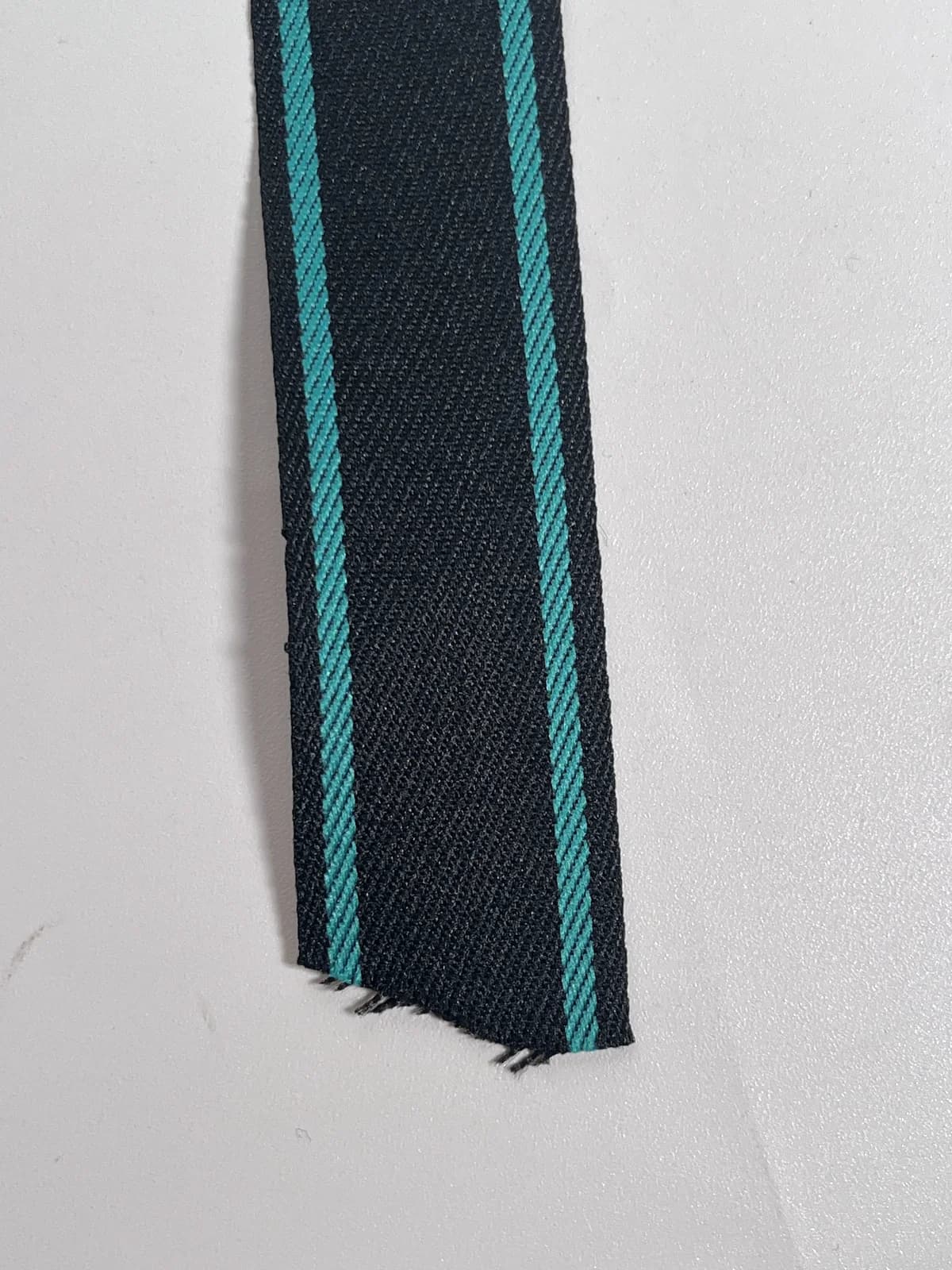
A supplier needs more than a nominal width. State the finished width, acceptable range and measurement condition. Narrow fabrics can respond to handling and tension, so agree whether the tape is measured relaxed and conditioned, where measurements are taken and how many pieces are checked. ASTM D3774 is one recognized method for textile-fabric width, but the buyer and supplier must confirm whether it suits the specific narrow fabric and purchase requirement.
Thickness, mass per length, edge shape and stiffness may control hardware fit, sewing and perceived quality. Select the measurements that matter to the product instead of demanding a generic list. If the webbing passes through an adjuster, send the physical hardware or a controlled drawing and approve the complete path. A tape can meet its width tolerance and still bind because its thickness, edge or fold geometry changed.
Define the woven repeat, logo orientation, readable face, reverse appearance and edge treatment. Ask whether the reverse will be visible after folding or assembly. If a design must start at a specific point on a cut piece, include the cut length and pattern position on a revision-controlled drawing. These decisions affect layout, material use and sampling, so they should be discussed before a price or production expectation is treated as final.
| Specification field | What to define | Useful approval evidence |
|---|---|---|
| Finished width | Nominal value, tolerance and relaxed measurement method | Recorded measurements on an identified sample |
| Thickness and hand | Relevant method plus target physical reference | Sample comparison and assembly trial |
| Pattern repeat | Length, direction, start point and allowable drift | Approved layout plus woven sample |
| Face, reverse and edge | Visible sides, edge shape, fold and sewing zone | Marked sample and assembly drawing |
The appropriate fields and limits depend on the end use. Do not copy tolerances from an unrelated webbing construction.
04Make Artwork Weavable Before Approving It
A jacquard logo is formed by yarn intersections, not printed pixels. Very small letters, fine outlines, tight curves and subtle gradients may be clear in vector artwork but lose definition at a narrow finished width. Send vector files where possible and identify the elements that cannot be simplified. The supplier can then prepare a woven interpretation with the proposed repeat, direction and yarn allocation.
Agree a practical hierarchy: brand name, icon, border, background and secondary details. If every element is treated as equally critical, the sample may become visually busy or require a different width and construction. Review positive and reversed colour versions when relevant, and decide how motifs meet at the repeat boundary. A digital layout can confirm scale and direction, but it cannot prove actual yarn colour, surface, edge or hand.
Keep artwork approval separate from physical-sample approval. Give each file a revision code and record what the approval covers. For example, layout approval may confirm repeat and orientation while yarn colour and edge remain open. A later email saying “approved” should not silently approve every variable shown in an early sample. Clear approval gates protect both the buyer and supplier when several teams review the project.
05Control Colour, Finish and Cut Ends
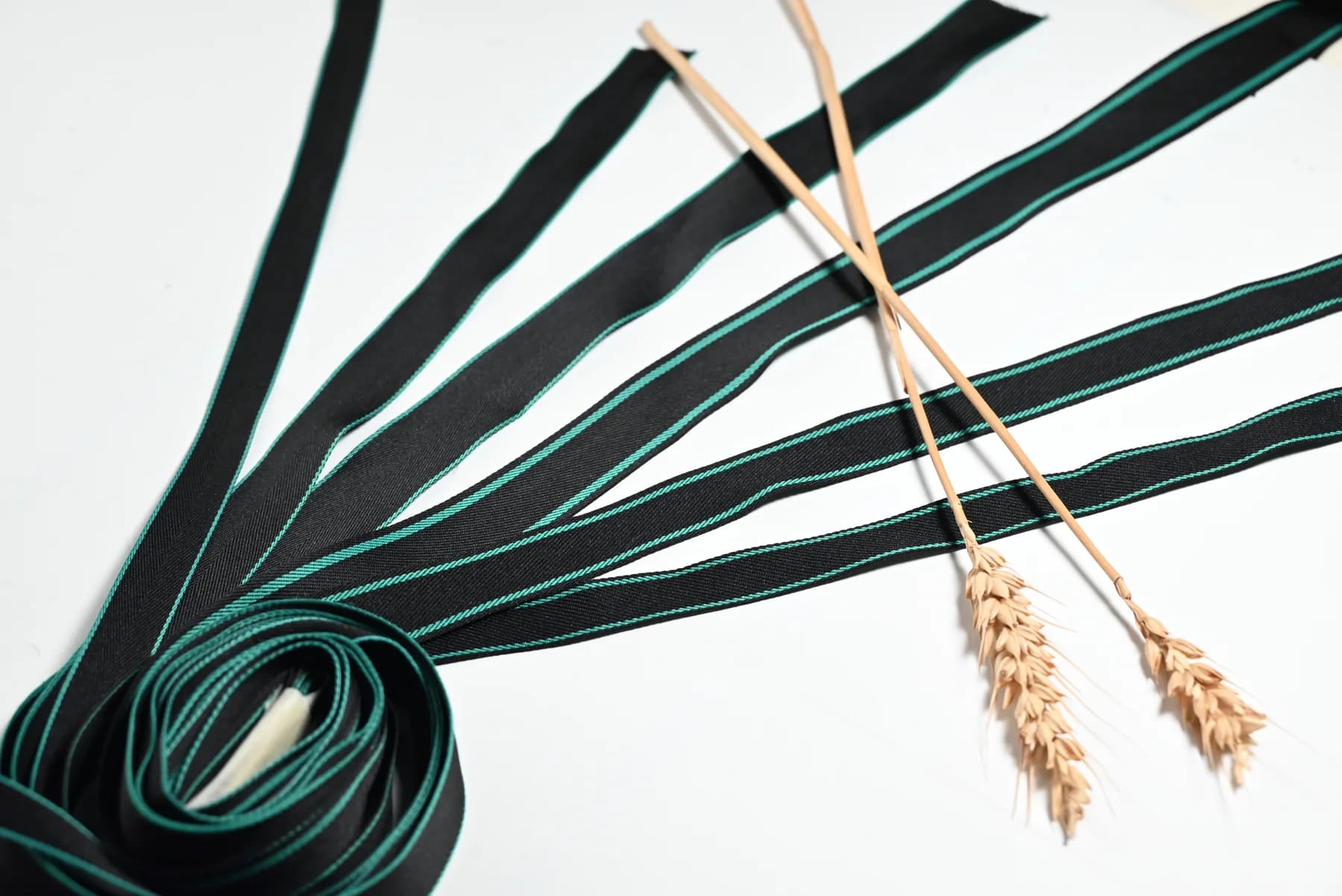
Screen colour is useful for direction but weak as a production standard. Provide a recognized colour reference or physical target when shade is critical, and agree the lighting and comparison conditions. Texture, sheen, fibre and yarn direction can affect perceived colour. Initial shade approval is also different from colourfastness: resistance to washing, rubbing, perspiration or light requires a relevant method and buyer-approved acceptance limit.
ISO 105-A02 describes the grey scale used to assess change in colour, but it does not by itself define every exposure, sample preparation or acceptance criterion. Select tests according to the actual product and market. Ask the supplier to identify the sample, method and result rather than relying on an unsupported statement such as “colourfast.” Where the jacquard contacts a pale fabric or skin, include the relevant product-level review.
Specify surface and end treatments that influence assembly or appearance: heat cutting, ultrasonic cutting, folded ends, tips, coating, brushing, washing, printing or anti-fray treatment. Define how the result will be evaluated. A “soft finish” should be compared to a reference; an end treatment should be checked for appearance, dimensions and compatibility with the real production process.
06Validate the Physical Sample in the Real Assembly
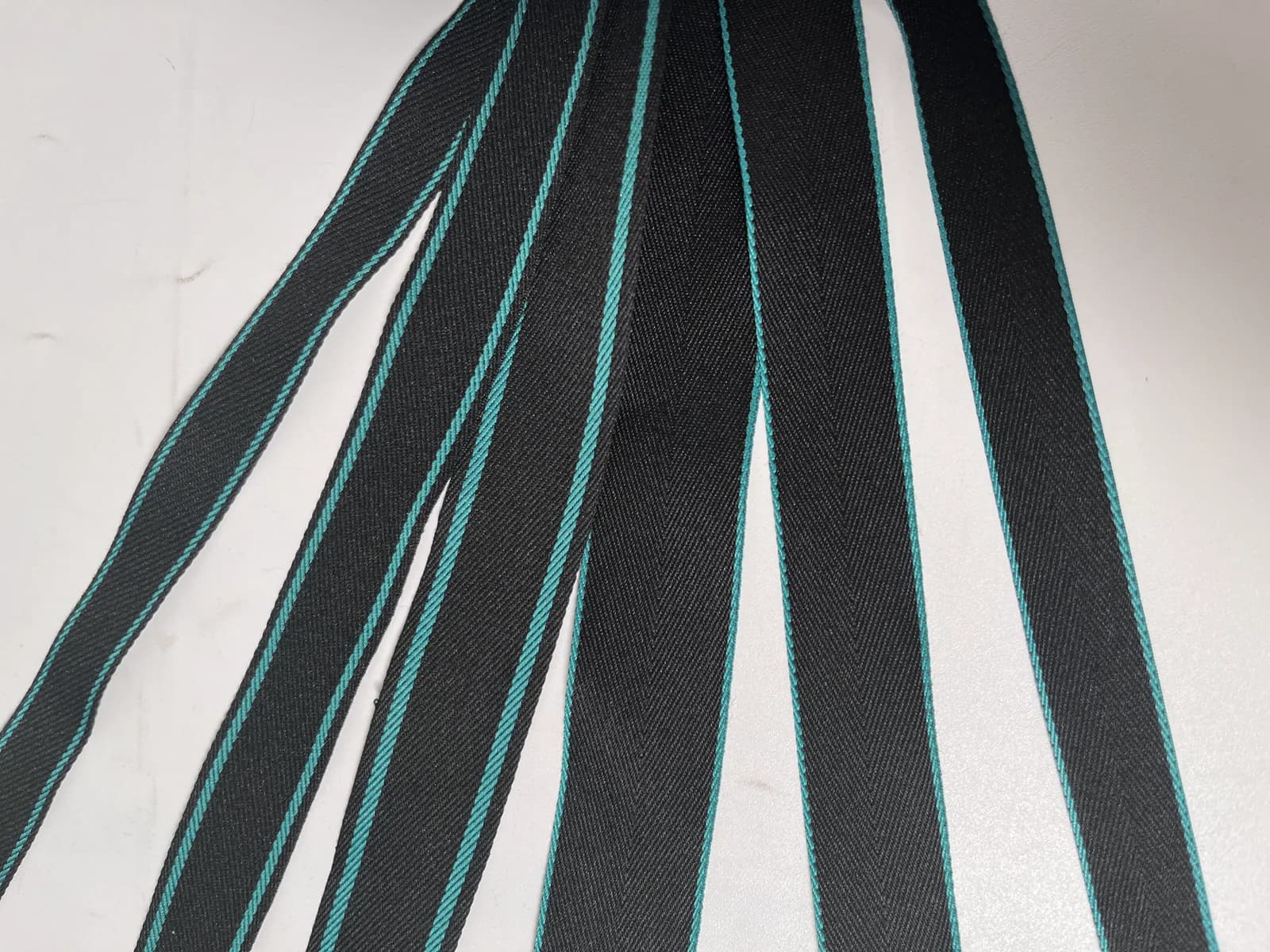
Define what each sample stage is intended to prove. A concept sample may confirm the general construction, while a colour sample, pre-production sample or shipment reference has a different purpose. Label material, width, artwork revision, colour, deviations and date. Both parties should retain the same approved reference under the same code so that later orders are compared against a controlled baseline.
Review the tape in the finished product using the intended needle, thread, stitch, seam allowance, fold, adhesive, heat process and hardware. Check logo direction, puckering, yarn damage, edge curl, slippage, colour transfer and user contact. Product-level validation is especially important where a tape is described as load-bearing, skin-contact, outdoor or frequently washed, because a component result alone may not predict the complete assembly.
Build a short scorecard before samples arrive. Separate visual checks, dimensional measurements, assembly trials and laboratory tests. Record exceptions instead of approving them informally. “Approved except for colour” is only useful when the target colour and the next verification step are named. After approval, link the quotation and purchase order to the specification, drawing and sample revision.

07Jacquard Webbing RFQ and Repeat-Order Checklist
A useful RFQ lets suppliers quote the same project assumptions. State the end use, webbing function, material direction, dimensions, construction, artwork revision, colours, finish, quantity by colour, packaging, destination and target timing. Attach the real hardware or a controlled drawing where fit matters. Ask the quotation to identify sample stages, tooling, tests, packing, Incoterm and any item that remains open to recommendation.
For repeat orders, keep change control visible. Ask for notice before changes to fibre source, yarn, weave, dyeing, finishing or production route where they may affect the approved result. A repeated product name is not proof that the underlying construction stayed the same. Retain the approved sample and key records long enough to compare appearance and measurable fields across orders.
Before sending the RFQ, ask a colleague who has not worked on the project to read it. If that person cannot identify the current drawing, colour reference, measurement method, intended assembly or next approval gate, the supplier probably cannot either. The goal is not more paperwork; it is a shorter, traceable route from artwork to a repeatable textile component.
- Finished product, component position, function and foreseeable exposure.
- Material or allowed options, composition and required documentation.
- Width, thickness, repeat, cut length and relevant measurement methods.
- Face, reverse, edge, hand, fold, sewing and hardware requirements.
- Artwork revision, logo direction, critical details and colour references.
- Sample stages, scorecard, tests, acceptance limits and approval records.
- Quantity by colour, packaging, destination, Incoterm and timing dependencies.
- Change-notification requirements for production and repeat orders.
08Frequently Asked Questions
What files should I send for custom jacquard webbing?
Send vector artwork where possible, the finished-product or assembly drawing, target width and repeat, colour references, quantity by colour and photographs or physical samples that show the intended hand and edge. Include hardware when the tape must thread through or fold around it.
Can every logo be woven clearly at any width?
No. Fine text, thin lines, gradients and dense curves can exceed the detail available from yarn intersections at a narrow width. Ask for a woven interpretation, approve scale and repeat digitally, then approve readability on a physical sample.
Is a digital layout enough for production approval?
It is useful for repeat, orientation and artwork detail, but it cannot confirm actual yarn colour, texture, thickness, edge, hand or assembly fit. Branded jacquard webbing normally needs a controlled physical sample as well.
Which material is best for jacquard webbing?
There is no universal best fibre. Choose according to product use, hand, appearance, care, exposure, assembly and documentation needs. Compare the exact proposed construction and validate it in the finished product.
How should repeat orders be controlled?
Link the purchase order to the current specification, drawing and approved sample code. Record critical measurements and appearance references, and require notice of material or process changes that could affect the approved result.
09Sources & further reading
Sources support the principles discussed; the final specification and test plan must follow the application and buyer requirements.
- ASTM D3774 — Standard Test Method for Width of Textile FabricASTM International
- ISO 105-A02 — Grey scale for assessing change in colourInternational Organization for Standardization
- OEKO-TEX STANDARD 100OEKO-TEX
- Recycled Claim Standard and Global Recycled StandardTextile Exchange