
01Choose From the Bag Application Backward
A material comparison is useful only after the strap’s job is clear. A fashion tote handle, backpack shoulder strap, luggage compression strap, camera sling, children’s bag trim and outdoor equipment loop encounter different loads, contact surfaces, moisture, sunlight, abrasion and appearance expectations. Start by mapping the load path and environment. Is the webbing decorative, load carrying or part of an adjustment system? Will it touch clothing or skin? Will it remain outdoors, be washed, drag on rough surfaces or repeatedly run through hardware?
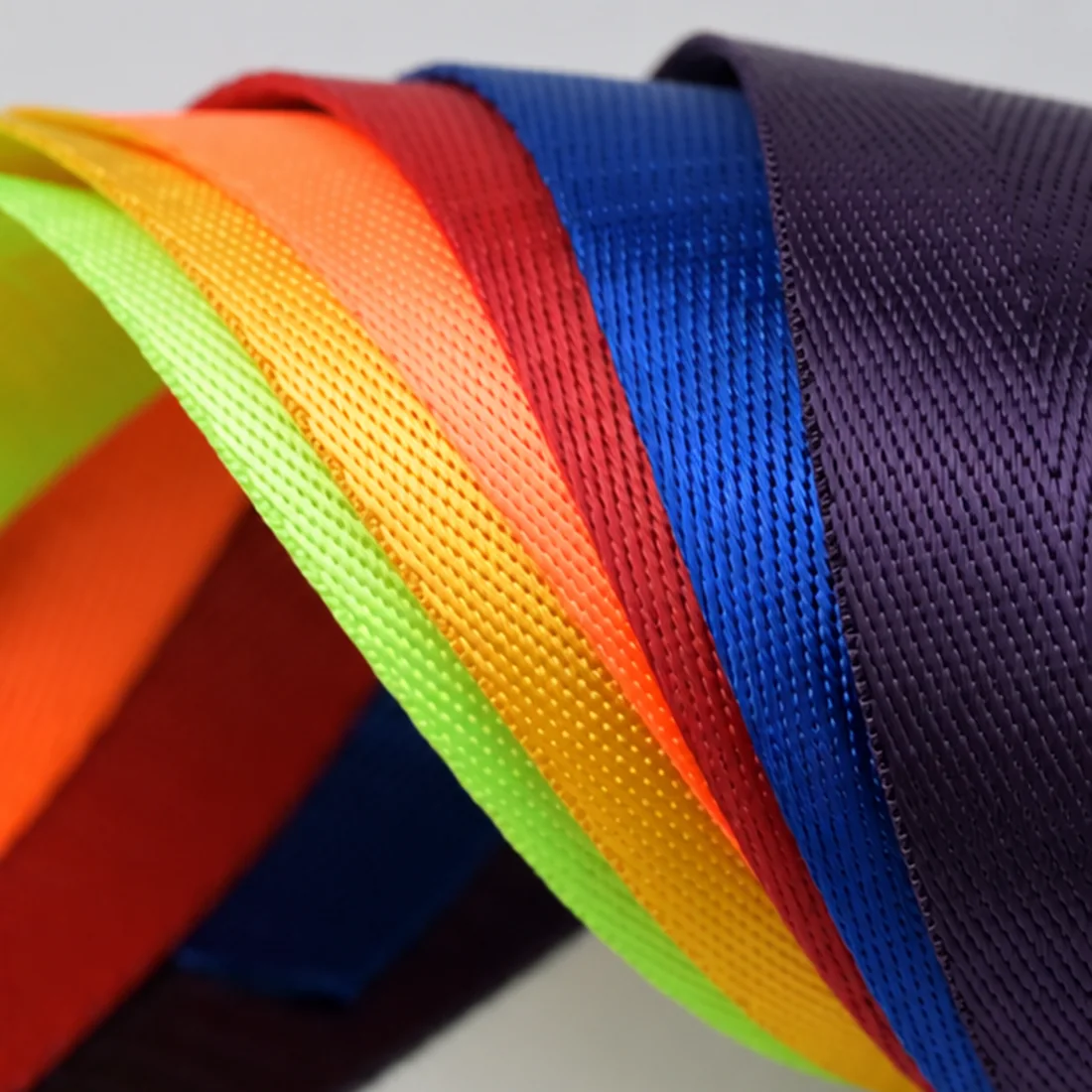
Then define the aesthetic and tactile target. Bags use webbing as both engineering component and visible brand surface. Buyers may want a silky face, dry technical hand, matte appearance, prominent weave, high colour saturation or recycled-content story. Fibre contributes to these attributes, but weave pattern, yarn size, density, texturing, dyeing and finishing can be equally influential. Compare finished constructions rather than assuming every nylon, polyester or polypropylene strap feels the same.
Finally define failure in product terms. A strap can fail by breaking, slipping through an adjuster, stretching excessively, abrading a garment, fading, bleeding colour, delaminating a print, fraying at a cut edge or making the bag feel cheap. Rank these outcomes. The primary risk determines which material tendencies matter and which assembly tests should be performed.
- Classify the strap as decorative, adjustment, carrying or safety-related.
- Describe moisture, sunlight, abrasion, temperature and care exposure.
- Identify hardware, seam, fold and edge-finishing interfaces.
- Rank the unacceptable failure modes before comparing materials.
02Understand the Material Tendencies—Without Turning Them Into Guarantees
Nylon webbing is frequently selected for a smooth hand, flexibility and strong abrasion reputation. It can accept rich dye colour and work well in premium-feeling straps. Nylon also tends to absorb more moisture than polyester or polypropylene, which may affect dimensions, drying and performance in wet conditions. Its response to sunlight and heat depends on polymer, additives, colour and construction, so outdoor suitability should be demonstrated rather than assumed.
Polyester webbing generally has lower moisture uptake than nylon and is widely considered for dimensional stability, outdoor use and colour retention. It can provide a firm, clean strap and is available in many constructions. Polyester is not automatically weatherproof: dyes, finishes, weave, thickness and exposure severity still control the outcome. If prolonged sunlight, rain or temperature cycling matters, specify and test those conditions on the final coloured construction.
Polypropylene has very low density and low water absorption, which can support lightweight, quick-drying and cost-sensitive applications. It is common in packaging, casual bags and utility products where its material character is acceptable. Compared with premium nylon or polyester constructions, polypropylene may present different hand, surface, temperature resistance or long-term UV behavior. Stabilized grades and specific constructions can improve performance, but the supplier should declare what is being offered and the buyer should test the finished strap.
| Decision factor | Nylon tendency | Polyester tendency | Polypropylene tendency |
|---|---|---|---|
| Hand and appearance | Often smooth, flexible and premium-feeling | Often clean, controlled and available from soft to firm | Often lighter and more utilitarian, depending on yarn and weave |
| Moisture | Higher moisture uptake than the other two | Lower moisture uptake and good dimensional control | Very low water absorption and quick-drying potential |
| Outdoor direction | Needs UV, moisture and colour validation | Often selected for weather and colour-retention priorities | Grade and UV stabilization are important for long exposure |
| Abrasion direction | Often chosen where flexible abrasion performance matters | Can provide durable abrasion performance in suitable constructions | Application-dependent; verify surface wear and edge behavior |
| Weight and cost direction | Often positioned toward premium applications | Broad middle-to-premium range | Low density and often cost-efficient |
These comparisons describe common tendencies. They do not replace supplier declarations, an approved physical sample or application-specific tests.
03Compare Hand, Appearance and Brand Expression
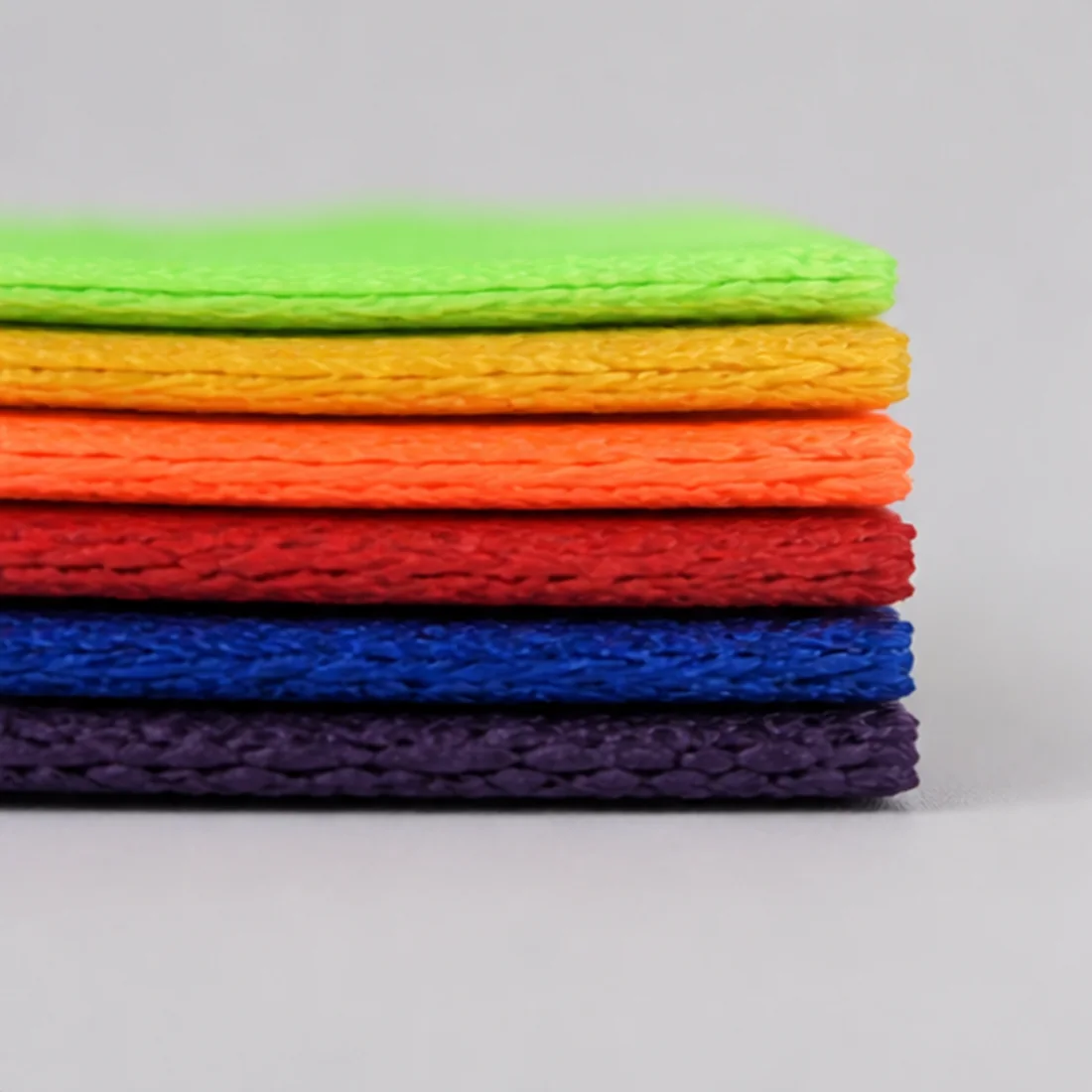
The perceived quality of a bag strap is influenced by more than fibre. Hold samples by the same width and similar thickness. Bend them around the intended hardware, rub the surface against the shell fabric and compare how the strap drapes from the bag. A dense weave can feel substantial but stiff; a softer strap can improve comfort yet fold or bunch in an adjuster. Textured yarn can create a dry hand, while smooth filament yarn can increase sheen.
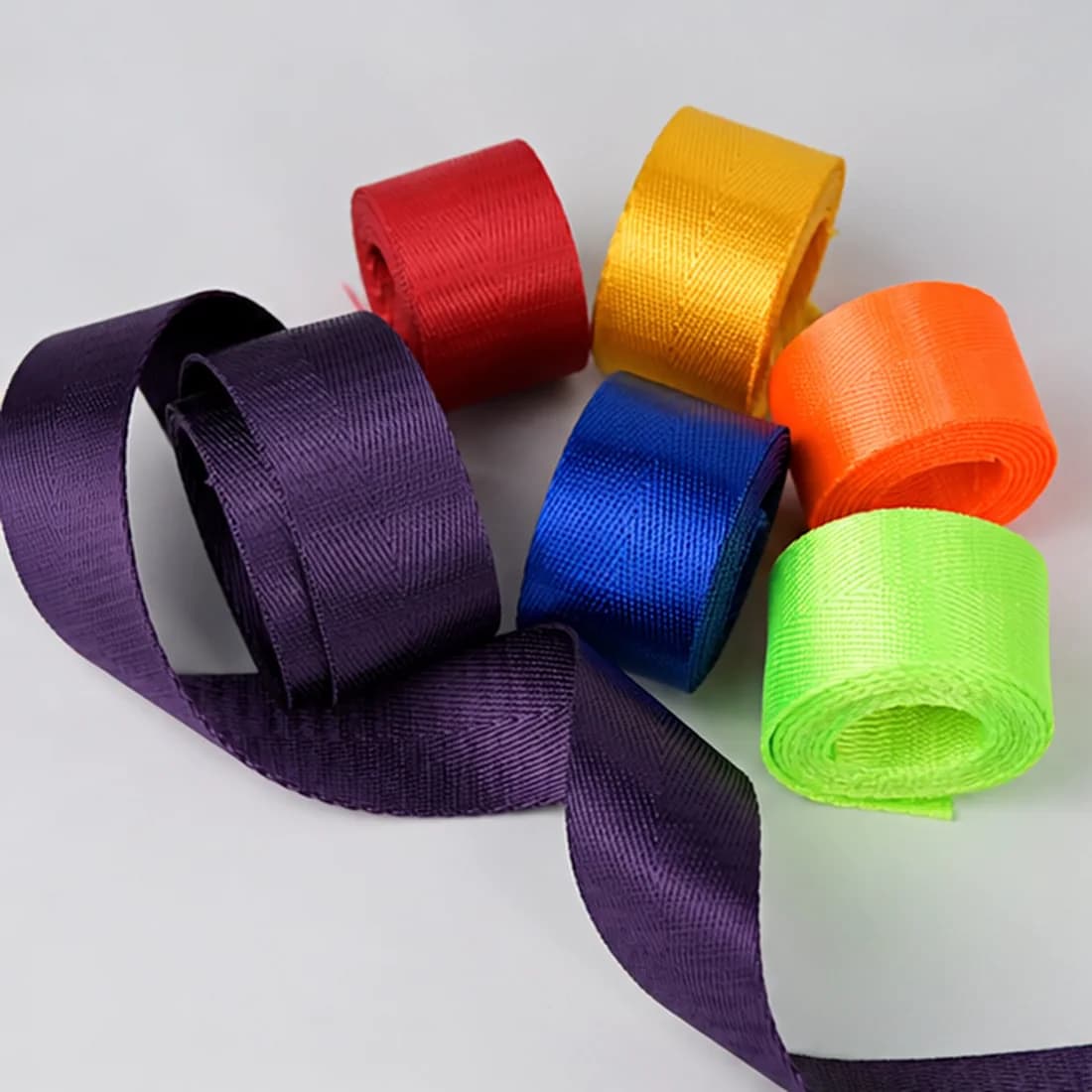
Colour should be evaluated on the real material. The same colour target can appear different because nylon, polyester and polypropylene use different dye systems and reflect light differently. A digital Pantone reference is not a complete production standard. Provide a physical colour reference where exact matching matters, agree viewing conditions and define an acceptable range. Fluorescent and very saturated shades may require special discussion about colourfastness, migration and lot variation.
For branded jacquard or printed straps, confirm how the material and construction affect logo clarity. A narrow width limits detail. Stretch or folding can distort the mark. Printing ink or transfer film can change surface feel and abrasion behavior. Review the normal-use view, not only the strap laid flat. If the bag is positioned as premium, approve edge quality, cut finish, join location and the way the webbing meets leather, fabric or molded hardware.
04Engineer the Strap, Seam and Hardware as One Load Path
Webbing strength data is not the same as bag performance. The finished assembly includes strap, folds, stitches, bar tacks, rivets, adjusters, buckles, anchors and shell material. Failure may occur at the weakest interface long before the straight webbing reaches its breaking load. For any load-carrying component, map how force moves from the user through the strap into the bag and test the complete configuration.
Hardware fit is especially important. Thickness, compressibility, surface friction and width tolerance affect how the strap feeds and whether it slips. A smooth strap may adjust easily but creep under load in a particular buckle. A thicker or rougher construction may hold better but jam during assembly. Test the production-colour strap because dyeing and finishing can alter surface and thickness. Use the intended threading path and free-tail length.
Define static, cyclic and misuse scenarios appropriate to the product. A laptop backpack may experience repeated shoulder loading, abrupt lifting and strap adjustment; luggage may experience handling shocks; a small fashion bag may prioritize seam appearance and reasonable carry load. Safety-critical, climbing, lifting or restraint applications require specialized standards and qualified engineering beyond a general bag-webbing guide. Never substitute a fashion webbing based only on similar width or appearance.
- Test the exact webbing, seam, fold, hardware and shell material together.
- Check slippage and adjustability under realistic cyclic load.
- Define width and thickness tolerances against the hardware opening.
- Use specialized standards and engineering for life-safety or regulated applications.
05Plan for Moisture, UV, Heat and Cleaning
Outdoor exposure combines variables. Sunlight can weaken polymer and alter colour; moisture can affect dimensions, drying and mildew risk in the complete bag; heat can influence webbing, coatings, adhesives and hardware. A single “outdoor grade” label is too vague. Define where the bag is sold and used, likely exposure duration, colours, cleaning instructions and acceptable appearance change. Dark, bright and fluorescent shades may behave differently under the same method.
Polyester is often shortlisted for outdoor bags because of lower moisture uptake and general UV/color-retention direction. Polypropylene may suit water-adjacent or lightweight products when the chosen grade and stabilization meet the exposure. Nylon may still be suitable where hand, flexibility and abrasion priorities dominate, but the wet and UV behavior should be assessed. The correct decision is the construction that passes the required product test, not the material with the strongest generic marketing statement.
Test cleaning on the assembled bag. Detergent, temperature, drying and mechanical action can affect colour transfer, shrinkage, wrinkling, coatings and seam puckering. If the care label is wipe-clean, test the cleaning agent and rubbing action. If machine washing is claimed, verify repeated cycles. Salt water, chlorinated water, perspiration or hydrolysis exposure may be relevant for specialized products. Make the test plan proportional to use and claim.
| Exposure | Potential webbing concern | Useful evidence |
|---|---|---|
| Rain and humidity | Moisture uptake, drying, dimensional change and colour transfer | Conditioned dimensions, wet handling and complete-bag dry-down review |
| Sunlight | Strength retention, fading and surface change | Defined accelerated or natural exposure on final colour |
| Heat | Softening, shrinkage, finish or adhesive interaction | Assembly trial at expected transport, use and care temperatures |
| Cleaning | Colourfastness, wrinkling, shrinkage and seam distortion | Repeated care-cycle evaluation on the finished bag |
| Perspiration or salt | Colour transfer, corrosion interaction and hand change | Application-relevant exposure with adjacent materials |
06Treat Recycled Content and Chemical Claims as Documented Requirements
Recycled nylon, recycled polyester and recycled polypropylene options may support a product strategy, but the claim must be tied to an applicable standard, certified scope and transaction evidence where required. A supplier certificate is not automatically evidence for every product or shipment. Identify the organization, facility, product category, percentage claim, chain-of-custody model and documents the brand expects. Align marketing language with what the evidence actually supports.
Consider durability alongside input claims. A strap that fails early and causes the whole bag to be replaced may conflict with the intended sustainability outcome. Evaluate abrasion, repairability, colour durability and hardware compatibility. Also consider design for disassembly if the brand has a recycling or repair program. These lifecycle questions do not mean one fibre is universally sustainable; they help the team avoid reducing a complex decision to a single material label.
Restricted-substance requirements should name the regulation, buyer protocol or certification and the responsible test stage. OEKO-TEX STANDARD 100 is widely used for harmful-substance testing in textiles, while brand RSL/MRSL programs may add requirements. Confirm whether the webbing, colour, finish and printed decoration are covered. A natural-looking or recycled material is not automatically chemically compliant.
- Specify the exact recycled-content standard and claim wording expected.
- Verify certificate holder, site, product scope, validity and transaction evidence.
- Include colour, finish, printing and coating in chemical-compliance review.
- Balance input claims with durability, repair and intended product life.
07Build a Material-Selection Sample and Test Matrix
Request comparison samples that isolate the decision. If possible, compare nylon, polyester and polypropylene in similar width, thickness and weave, or ask the supplier to explain where exact matching is not feasible. Label every sample with declared composition and construction. Blind visual comparison can help reveal preferences, but fibre identity should come from supplier documentation or analysis—not appearance.
Create a scorecard with weighted criteria. For a premium commuter backpack, hand, abrasion, colour, buckle control and seam appearance may dominate. For a lightweight promotional drawstring bag, cost, weight and colour availability may receive more weight. For an outdoor equipment bag, moisture, UV direction, strength retention and hardware performance may lead. Scoring makes trade-offs visible and prevents one stakeholder from choosing only by touch while another assumes the cheapest quote is equivalent.
Test in stages. First screen material and construction. Then build seam and hardware coupons. Finally make a representative bag or load-bearing section in production materials. Record conditioning, method and acceptance limits. External laboratory testing may be needed for formal claims, customer protocols or high-risk attributes. Retain approved samples and results with the final bill of material so repeat orders do not drift to an unverified substitute.
08Practical Selection Matrix and Bag-Webbing RFQ Checklist
Use material as a shortlist, not the entire specification. Nylon is a strong candidate when premium hand, flexibility and abrasion reputation lead, provided moisture and outdoor requirements are validated. Polyester is a strong candidate for controlled dimensions, lower moisture uptake and outdoor colour direction. Polypropylene is a strong candidate for lightweight, low water absorption and cost-sensitive utility. Any of the three can be unsuitable when the grade, weave, finish, hardware or test result does not match the product.
Send the supplier a brief that connects business and technical needs. Ask for one recommended construction and, when useful, one alternative with a clear trade-off. Require the quotation and sample label to repeat the proposed material, width, thickness, colour, finish and assumptions. If an attribute is critical, attach its test method and acceptance limit. If it is exploratory, state the target and invite a recommendation.
The final decision should be recorded in the bag bill of material and control plan. Include approved supplier, item code, fibre declaration, construction, dimensions and tolerances, colour reference, finish, edge or cut treatment, artwork, hardware path, seam specification, tests, packing and change-notification requirement. This prevents future teams from replacing “38 mm black polyester webbing” with a visually similar but functionally different strap.
- Bag type, target market, expected load and whether the strap is decorative or structural.
- Material preference plus acceptable alternatives and desired hand/appearance.
- Width, thickness, weave, colour, finish, logo and edge treatment.
- Hardware drawings or samples, threading path, folds, seams and shell fabric.
- Moisture, UV, temperature, abrasion and cleaning exposure.
- Assembly and product-level test methods with acceptance limits.
- Order quantity by colour, packaging, destination, Incoterm and schedule milestones.
- Recycled, chemical or certification requirements and required documents.
- Approved sample identity and notice/re-approval rules for changes.
09Frequently Asked Questions
Is nylon or polyester webbing better for backpack straps?
Both can work. Nylon is often considered for flexible hand and abrasion performance, while polyester is often shortlisted for lower moisture uptake, dimensional stability and outdoor colour direction. The better option is the exact construction that meets comfort, hardware, seam and durability tests for the backpack.
Is polypropylene webbing waterproof?
Polypropylene has very low water absorption, but a finished strap or bag should not be called waterproof from fibre identity alone. Weave openings, seams, coatings, attached fabrics and hardware determine water entry and complete-product performance.
Can I identify nylon, polyester and polypropylene by appearance?
Not reliably. Sheen, hand and density may suggest possibilities, but yarn form, finish and construction can imitate one another. Use supplier declarations, traceable material records or appropriate analysis when fibre identity matters.
Which webbing is best for outdoor bags?
Polyester is frequently considered because of moisture and UV/color-retention tendencies, while stabilized polypropylene and suitable nylon constructions may also work. Define the exposure and test the final colour, weave, seam and hardware assembly rather than relying on “outdoor grade” alone.
What information should a bag webbing RFQ include?
Include bag use, load role, material direction, width, thickness, weave, colour, finish, hardware, seam, exposure, test requirements, quantity, packing, destination, timing and compliance documents. Attach hardware and physical references when fit or colour is important.
10Sources & further reading
Sources support the principles discussed; the final specification and test plan must follow the application and buyer requirements.
- Polyamide fibres — general informationEncyclopaedia Britannica
- Polyester fibre and polymer overviewEncyclopaedia Britannica
- Polypropylene plastic overviewEncyclopaedia Britannica
- AATCC test methods and evaluation proceduresAATCC
- Global Recycled StandardTextile Exchange
- OEKO-TEX STANDARD 100OEKO-TEX