
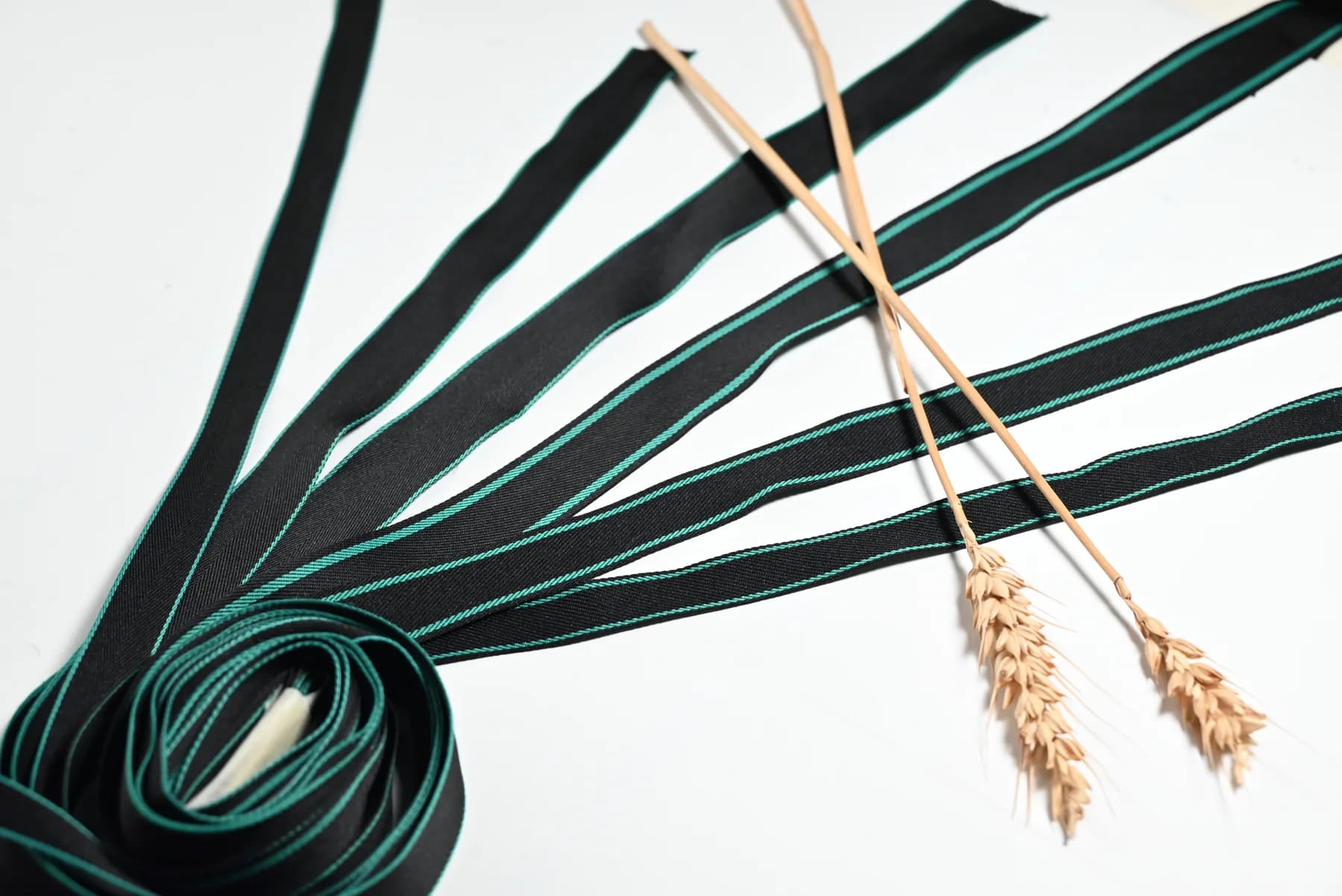
01Start With the Application and the Cost of Failure
Custom webbing should not begin with colour, price or even fibre. It should begin with what the component will do. A decorative garment tape, a waistband elastic, a bag shoulder strap and a loop that passes through hardware can look similar in a photograph while requiring different construction, hand, dimensional control and validation. Describe the complete product, where the tape is installed, how it is assembled and what happens if it stretches, frays, slips, stains or changes colour.
Write down foreseeable conditions: repeated bending, direct skin contact, washing, moisture, sunlight, abrasion, load, temperature, metal hardware and contact with other materials. State whether the webbing is structural, functional, decorative or brand-critical. This lets the supplier propose relevant options and helps the buyer decide how much evidence is proportionate. A cosmetic logo tape may need strict artwork and colour approval; a load-bearing strap also needs an application-specific test plan.
Separate requirements into three groups: fixed, preferred and open to recommendation. Fixed items may include finished width, brand colours or a restricted-substance requirement. Preferences may include hand or sheen. Open items may include yarn type, weave density or edge construction. This simple classification prevents a supplier from treating every preference as mandatory or making silent choices where approval is required.
- Name the finished product and the exact location of the webbing.
- Describe sewing, folding, bonding, threading and hardware contact.
- List relevant wear, care, climate and skin-contact conditions.
- Mark every field as fixed, preferred or open to recommendation.
02Define Dimensions With a Measurement Method
Width is one of the first fields on a webbing quotation, but a nominal number alone is incomplete. State the finished width, the acceptable range and where it is measured. Soft narrow fabrics can change under tension, humidity or handling, so the sample should be measured in a relaxed and conditioned state using an agreed method. ASTM D3774 is one recognized standard for textile-fabric width; the buyer and supplier still need to confirm whether it is appropriate for the particular tape and purchase requirement.
Thickness, mass per unit length and yarn density can influence hand, hardware fit, sewing and perceived quality. Do not demand every possible measurement. Select the dimensions that control the application and explain the method, equipment, location and sample count. If a tape must pass through an adjuster, send the hardware drawing or physical hardware and approve the assembled path. A width that passes a ruler check can still bind when the edge, thickness or fold changes.
Use drawings for cut length, hole position, printed or woven repeat, logo orientation and sewing zones. Give dimensions from stable reference points and define whether tolerances are bilateral or one-sided. Revision-date every drawing. A drawing marked “latest” without a revision code creates avoidable risk when purchasing, sampling and quality teams hold different files.
| Specification field | Define | Approval evidence |
|---|---|---|
| Finished width | Nominal value, tolerance and relaxed measurement method | Recorded measurements on identified sample |
| Thickness or mass | Method, locations and relevance to assembly | Sample report and hardware or seam trial |
| Pattern repeat | Length, orientation, start point and allowable drift | Approved artwork plus physical sample |
| Cut length | Datum, tolerance and end treatment | Cut component drawing and inspection record |
The correct fields and tolerances depend on the end use. Do not copy limits from an unrelated product.
03Specify Material and Construction Without Closing Off Better Options
Polyester, nylon, polypropylene, cotton and recycled-content options can all be appropriate, but fibre name does not define the finished webbing. Yarn form, denier, twist, weave or knit structure, density, elastic element, heat setting, dyeing and finishing also affect hand, appearance and behaviour. If the application allows alternatives, describe the outcome you need and ask the supplier to document each proposed construction rather than quoting an unspecified “equivalent.”
State composition as a declared requirement and identify whether traceable recycled content or a named certification is required. OEKO-TEX STANDARD 100 concerns testing textile products for harmful substances, while Textile Exchange standards such as RCS and GRS address verified recycled input and chain-of-custody requirements. These systems answer different questions. Ask which entity, site, product scope and transaction documents apply instead of assuming that a logo on a presentation covers every order.
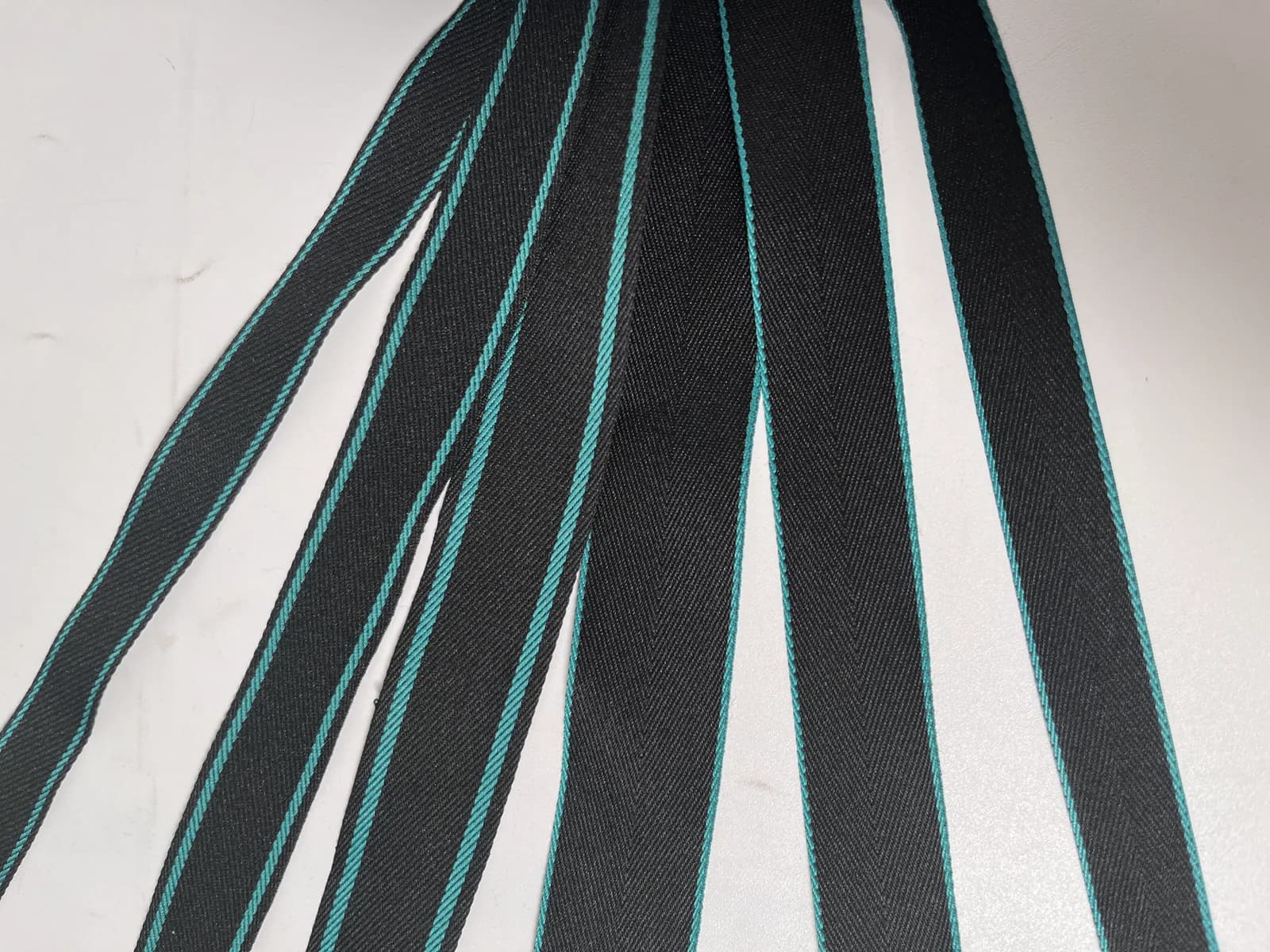
Construction terms should be accompanied by a reference or sample. “Herringbone,” “plain weave,” “rib,” “jacquard” and “knitted elastic” describe families, not a complete specification. Record face and reverse, edge type, stretch direction, texture, sheen and any intentional asymmetry. Where the visual result matters more than an internal yarn count, approve a controlled physical sample and define which measurable attributes will protect repeat orders.
04Control Colour, Artwork and Brand Details
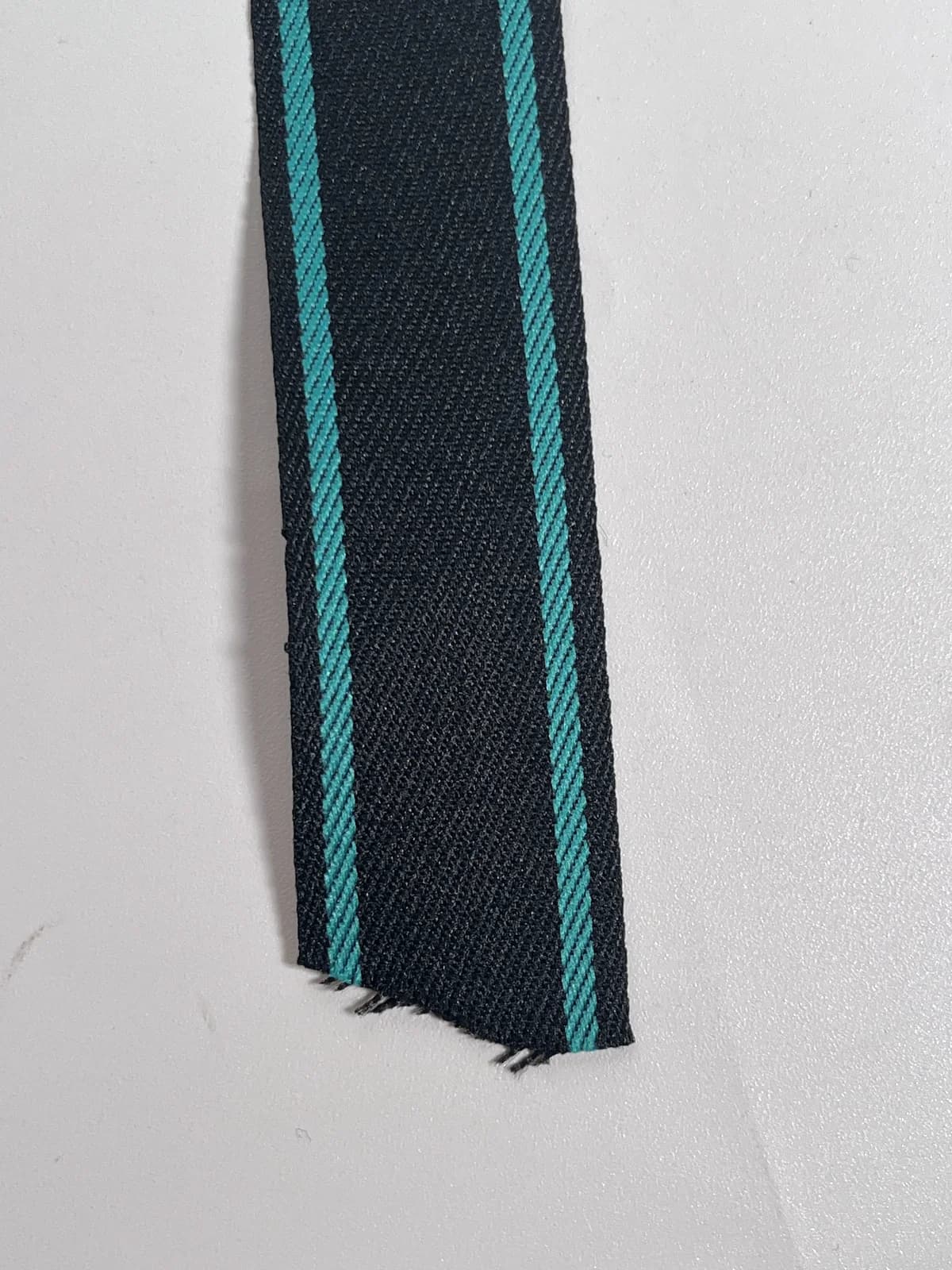
Screen images are useful for direction but weak as production colour standards. Provide a recognized colour reference or a physical target when colour is brand-critical, and define the lighting and comparison method. ISO 105-A02 describes the grey scale used to assess change in colour, but a complete colourfastness plan also needs the relevant exposure—such as washing, rubbing, light or perspiration—and buyer-specific acceptance criteria.
For woven logos, provide vector artwork whenever possible. Identify minimum letter height, critical line weight, repeat length, face direction and acceptable simplification. A design that is clear on a screen may not reproduce at a narrow width because each detail must be represented by yarn intersections. Ask for a digital layout to confirm repeat and orientation, then approve a physical sample for actual yarn colour, edge and readability.
Record colour and artwork approvals separately. A logo layout can be approved while yarn colour remains open, or a lab dip can be accepted while weave detail requires revision. Give each approval a code and date. This avoids the common situation in which an email saying “approved” is applied to a sample containing several unresolved variables.
05Include Edge, Cut, Surface and Assembly Requirements
Finishing determines how the webbing behaves in the buyer’s factory and finished product. Describe cut method, anti-fray treatment, fold direction, tip, coating, printing, silicone, brushing, washing or other surface process. If a finish is needed for grip, softness or appearance, define how it will be evaluated. Avoid unsupported labels such as “non-slip” or “waterproof” without a method and acceptance limit.
Test the component in the real assembly. Use the intended needle, thread, stitch pattern, seam allowance, adhesive, heat process or hardware. Watch for puckering, yarn damage, edge curl, colour transfer and slippage. When the buyer supplies hardware or fabric, identify its revision and source. A supplier cannot reliably protect compatibility if the mating component changes without notice.
Packaging is part of the technical brief where crease, contamination, winding tension or orientation matters. State roll or piece format, maximum roll length if relevant, joining rules, labels, protective packing and traceability information. A webbing that passes production inspection can still arrive unusable if it is folded, compressed or mixed incorrectly.
06Use Sampling as a Controlled Approval Sequence
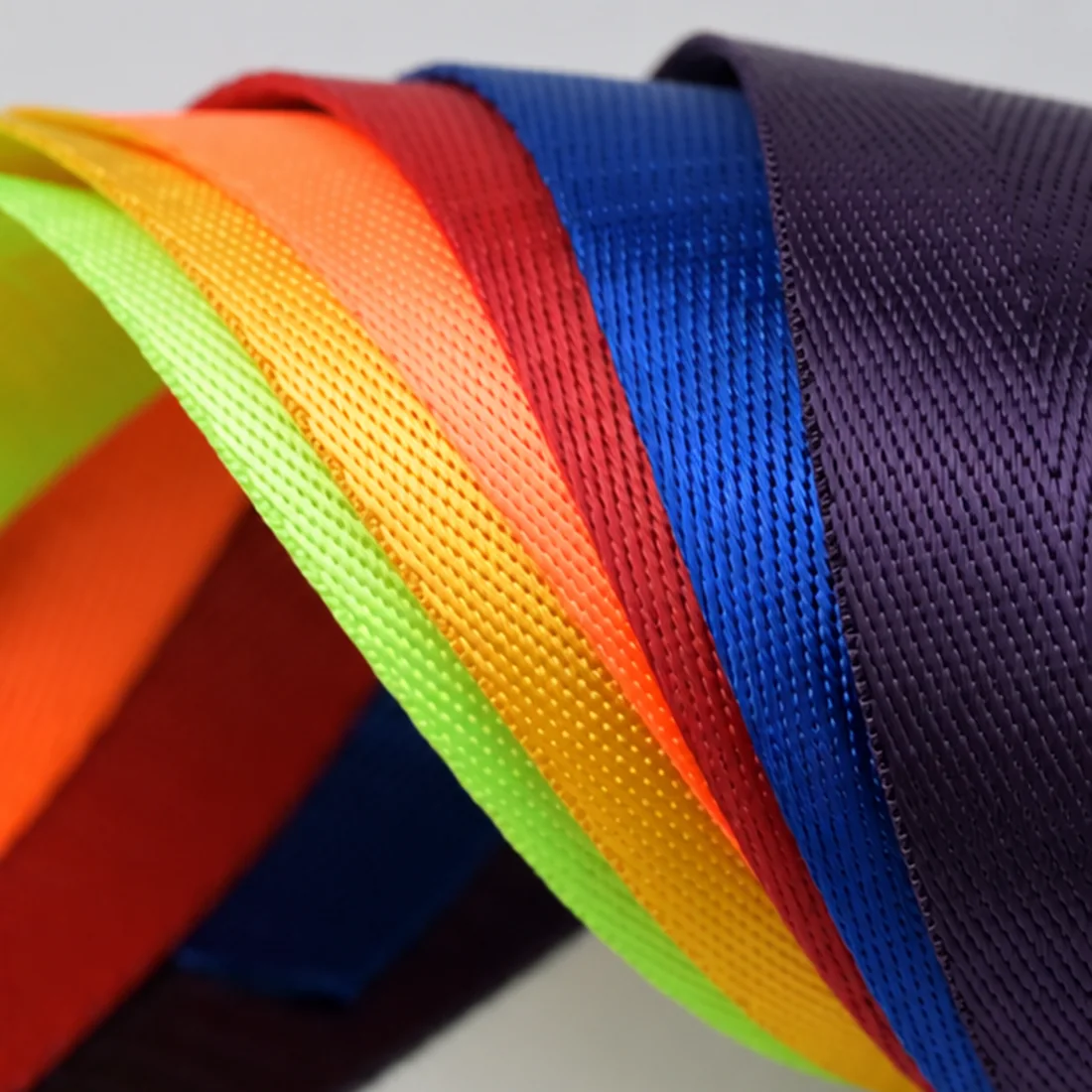
A first sample may be intended to prove construction, not final colour or bulk-process consistency. Label the purpose of each stage: concept sample, construction sample, colour sample, pre-production sample or shipment reference. Record material, dimensions, artwork revision, deviations and date. Both parties should retain the same approved reference under the same code.
Build a scorecard before receiving the sample. Review appearance, dimensions, hand, stretch where relevant, logo, repeat, colour, cut end, hardware fit, seam behaviour and packing. Identify which checks are visual, which are measured and which require a laboratory or finished-product trial. Sign off exceptions explicitly. “Proceed, but correct the blue” is not a complete approval unless the blue target and new verification gate are defined.
After approval, link the quotation and purchase order to the specification and sample revision. Require notice before changes to fibre source, yarn, construction, dyeing, finishing or production route where those changes can affect the approved outcome. Change control is especially important for repeat orders because a matching item name does not prove that the underlying process stayed the same.

07Custom Webbing RFQ Checklist
A useful RFQ lets a supplier see the application, confirmed requirements and unanswered questions in one place. It does not need to be a long engineering document for every project, but it should prevent different suppliers from pricing different assumptions. Attach files with revision codes and ask each quotation to list exclusions, tooling, sample stages, testing, packing, Incoterm and timing dependencies.
Before issue, ask a colleague who has not worked on the project to read the brief. If that person cannot identify the approved colour reference, measurement method, required documents or next approval gate, the supplier probably cannot either. The goal is not paperwork for its own sake; it is a shorter path from concept to a repeatable component.
- Finished product, webbing function, assembly and foreseeable exposure.
- Material or acceptable options, composition and documentation requirement.
- Width, thickness, repeat, cut length and relevant tolerances with methods.
- Construction, face/reverse, edge, stretch direction and hand direction.
- Artwork revision, logo orientation, colour target and comparison method.
- Cut, finish, coating, print, grip, softness or other surface requirement.
- Hardware, fabric, sewing, bonding or product-level compatibility checks.
- Quantity by colour, sample quantity, packing, destination and Incoterm.
- Sample stages, approval record, tests, acceptance limits and change control.
08Frequently Asked Questions
What information is essential for a custom webbing quotation?
At minimum, provide the end use, function, material direction, finished width, construction or reference, colour or artwork, finish, quantity, packing, destination and timing. Add hardware, sewing and test requirements where they affect performance or fit.
Should I specify a webbing tolerance before sampling?
Give the functional requirement and proposed tolerance, but confirm that the method and limit are realistic for the construction during sampling. The approved specification should state the final tolerance, measurement condition, equipment and sampling rule.
Is a Pantone reference enough to approve textile colour?
It is useful direction, but yarn, fibre, texture and lighting affect appearance. For critical colour, agree the reference, lighting, comparison method and physical approval sample. Colourfastness requirements are separate from initial shade approval.
Do I need separate artwork and physical-sample approvals?
Usually yes for branded webbing. Artwork can confirm repeat, orientation and detail, while a physical sample confirms actual yarn, colour, construction, edge and hand. Record what each approval covers.
Can the supplier recommend material and weave?
Yes. State the required outcome and application, ask the supplier to explain the proposed trade-offs, then document and validate the selected construction. Recommendations should not remain undocumented assumptions.
09Sources & further reading
Sources support the principles discussed; the final specification and test plan must follow the application and buyer requirements.
- ASTM D3774 — Standard Test Method for Width of Textile FabricASTM International
- ISO 105-A02 — Grey scale for assessing change in colourInternational Organization for Standardization
- OEKO-TEX STANDARD 100OEKO-TEX
- Recycled Claim Standard and Global Recycled StandardTextile Exchange