
Position and Function
Identify the exact garment position and whether the trim reinforces, binds, adjusts, carries branding or provides a finishing detail.
Apparel and outerwear
Develop waist, edge, reinforcement, branding and finishing details around the garment construction, desired hand feel and the way the component will be sewn or assembled.
Application-first selection
The same visual direction can require a different structure when it moves from a decorative edge to a load-bearing loop or a skin-contact waistband.
Identify the exact garment position and whether the trim reinforces, binds, adjusts, carries branding or provides a finishing detail.
Explain the target softness or firmness, stitch path, fold, seam allowance and contact with the shell fabric, lining or hardware.
Provide the colour or artwork reference and describe washing, abrasion, repeated flexing or other conditions relevant to the finished garment.
Relevant product directions
Compare the product directions most often reviewed for this application, then confirm the construction against your actual assembly and use conditions.
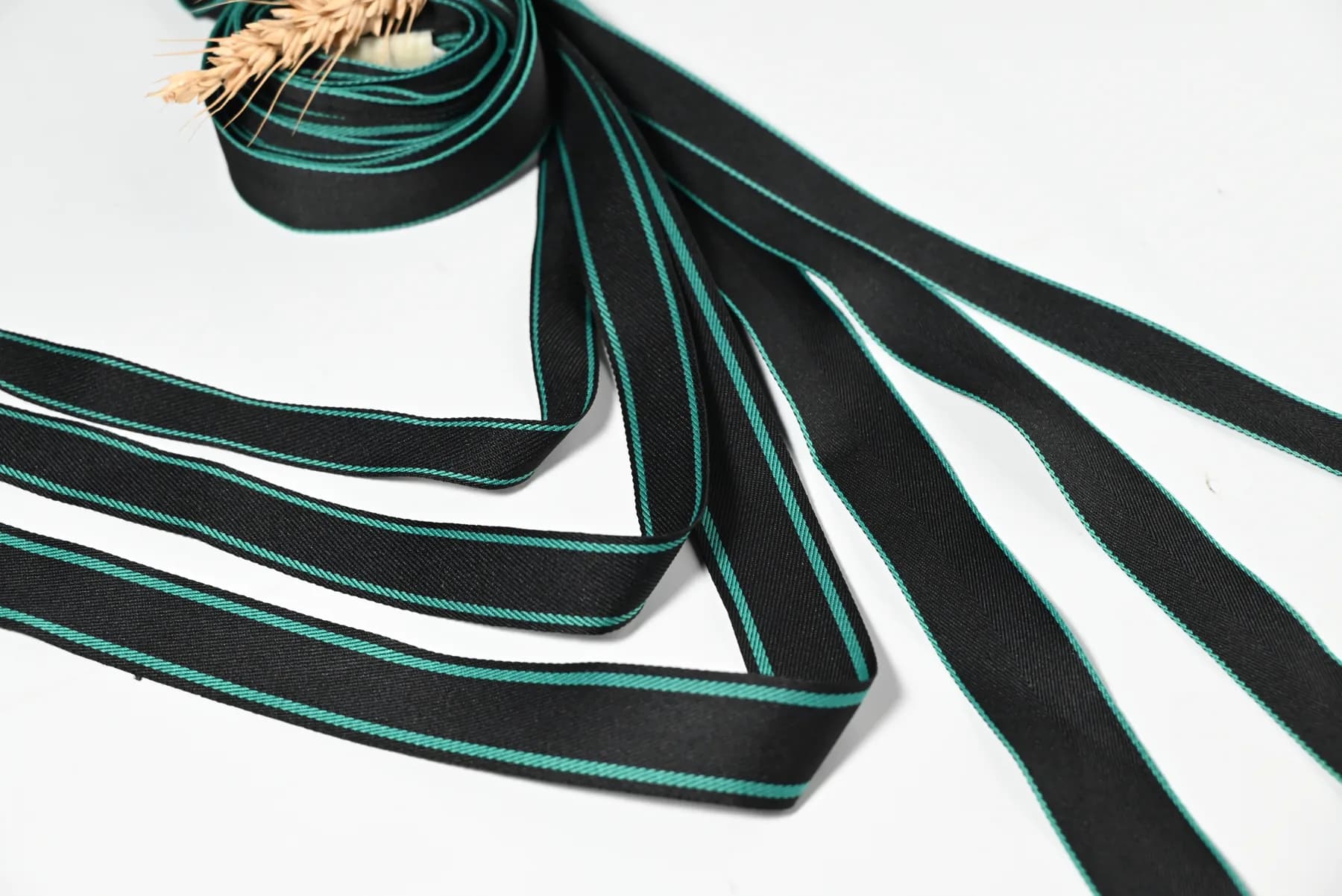
Custom woven webbing for straps, garment details, bags and accessories.
View Product →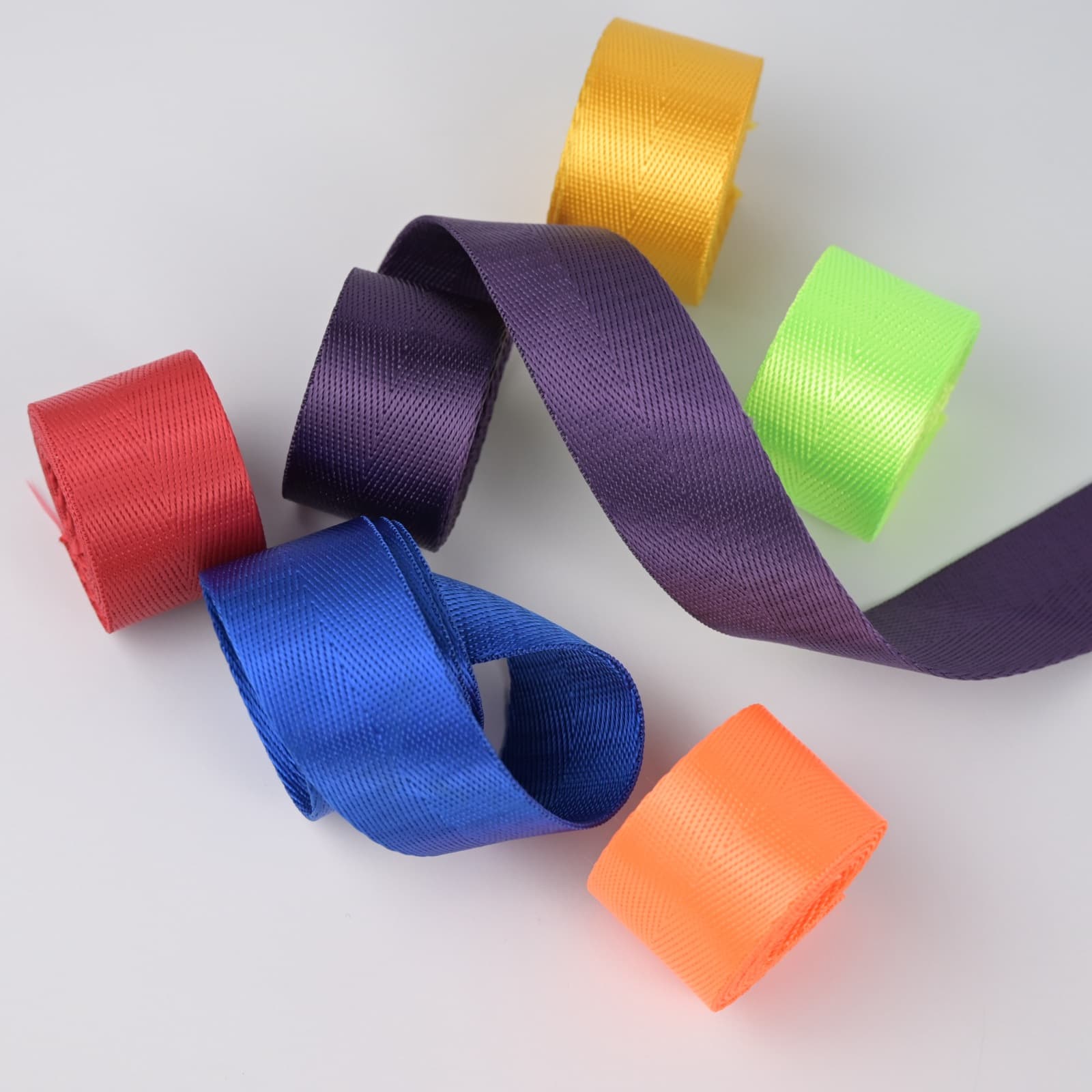
Custom nylon webbing developed for bags, apparel, footwear and accessories where a smooth hand, flexible construction and rich colour are priorities.
View Product →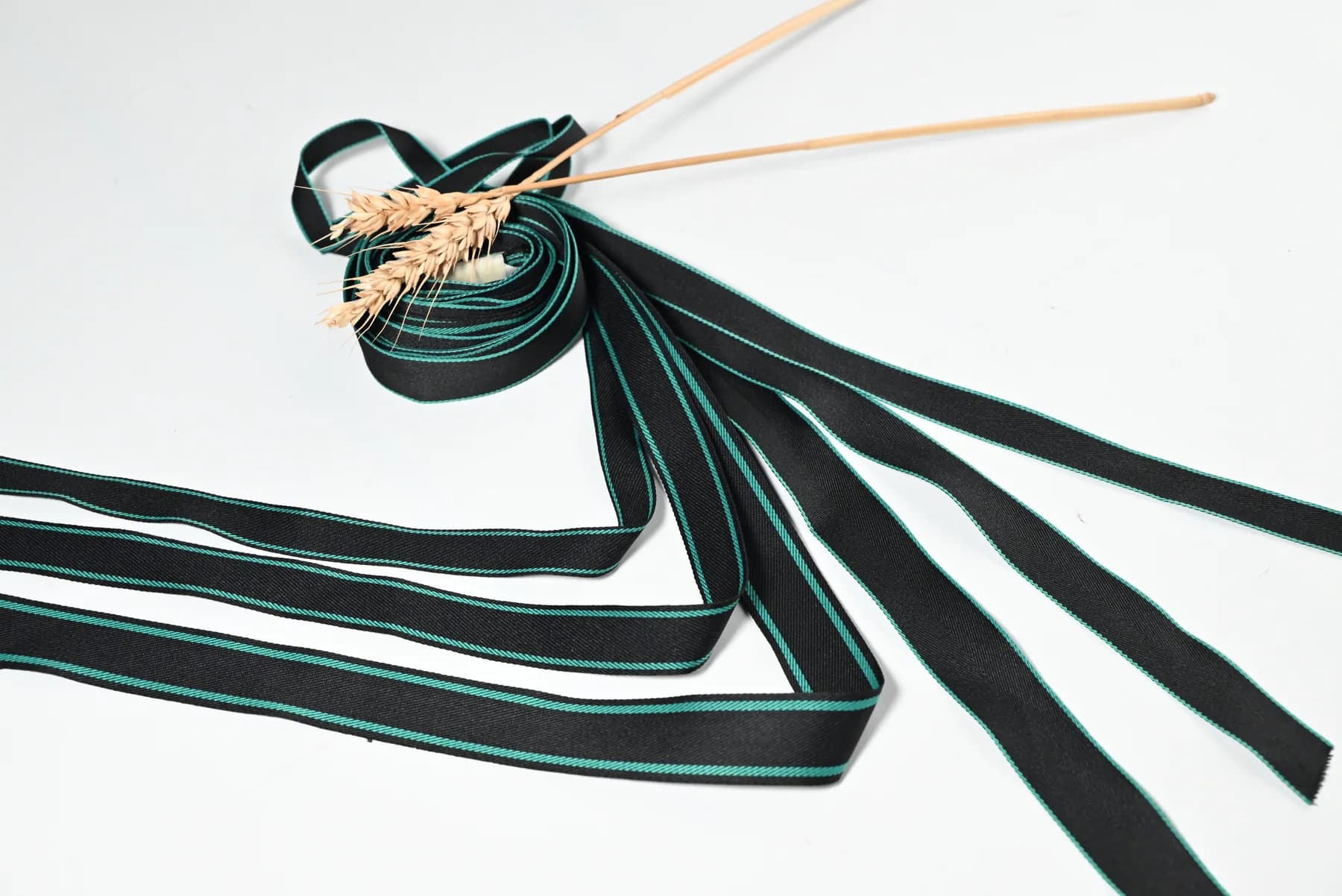
Woven logos, stripes and repeat patterns developed from buyer artwork.
View Product →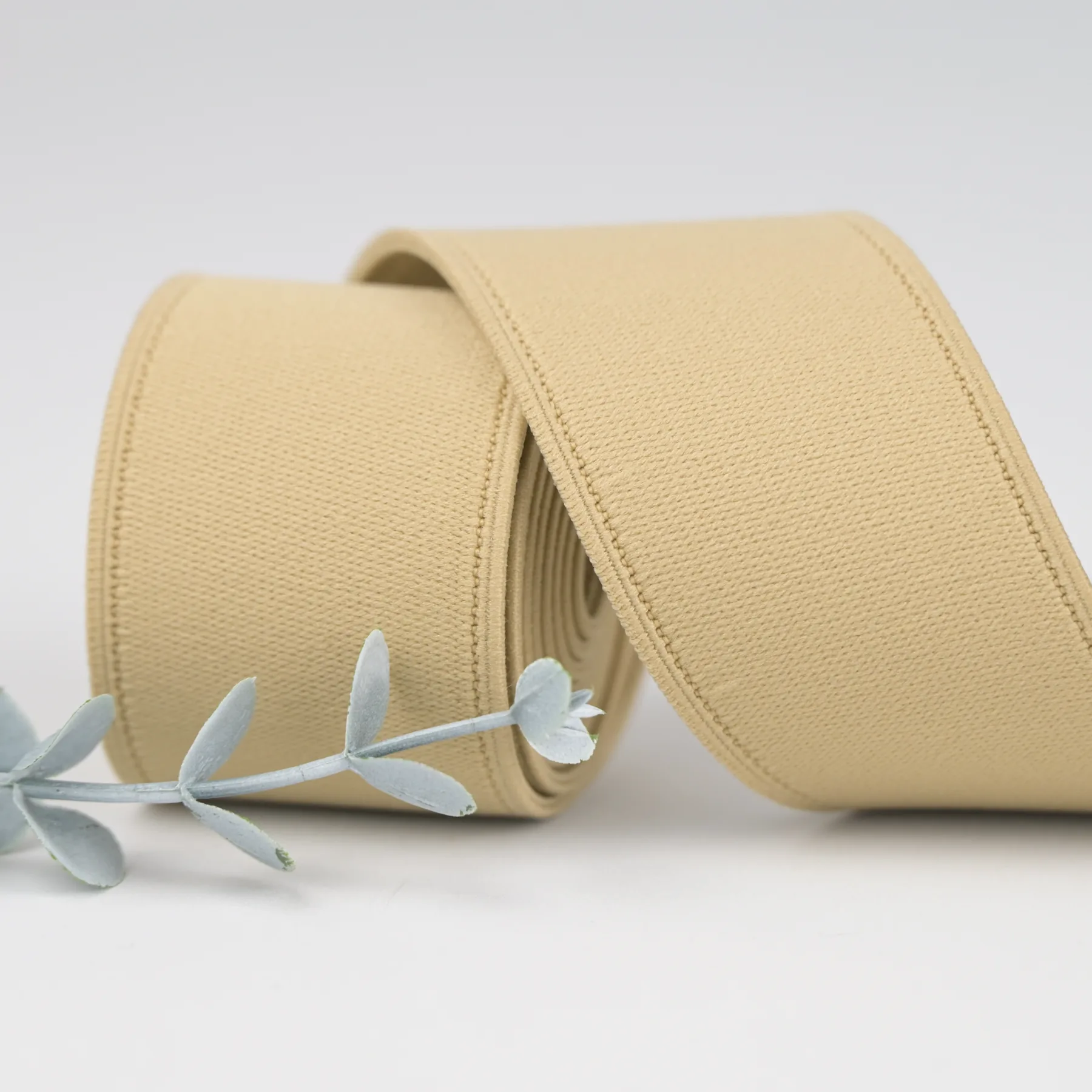
Rib-knit and narrow textile accessories for garment finishing.
View Product →Inquiry checklist
A clear brief helps separate fixed brand requirements from details that remain open to supplier recommendation.
Buyer resources
Use these guides to prepare the technical and commercial information a supplier needs before sampling.
Buyer questions
There is no single best construction. Decorative tapes, reinforcement loops, branded jacquard details and soft knitted finishes have different priorities. Start with the garment position, assembly and required hand, then approve the selected construction through a physical sample.
Yes when branding is important. Artwork approval can confirm repeat, orientation and readable detail, while the physical sample confirms yarn colour, woven appearance, edge and hand. Record what each approval covers.
Choose checks from the actual risk: dimensions, seam behaviour, colour, abrasion, washing, skin contact or hardware fit. The method and acceptance limit should be agreed for the garment rather than copied from an unrelated product.
Send the garment image or drawing, trim position, dimensions, material direction, artwork and quantity. We will identify the next specification questions before sampling.