
Position and Recovery
Define the opening, edge or panel position and the recovery needed to hold shape without creating pressure, flare or distortion.
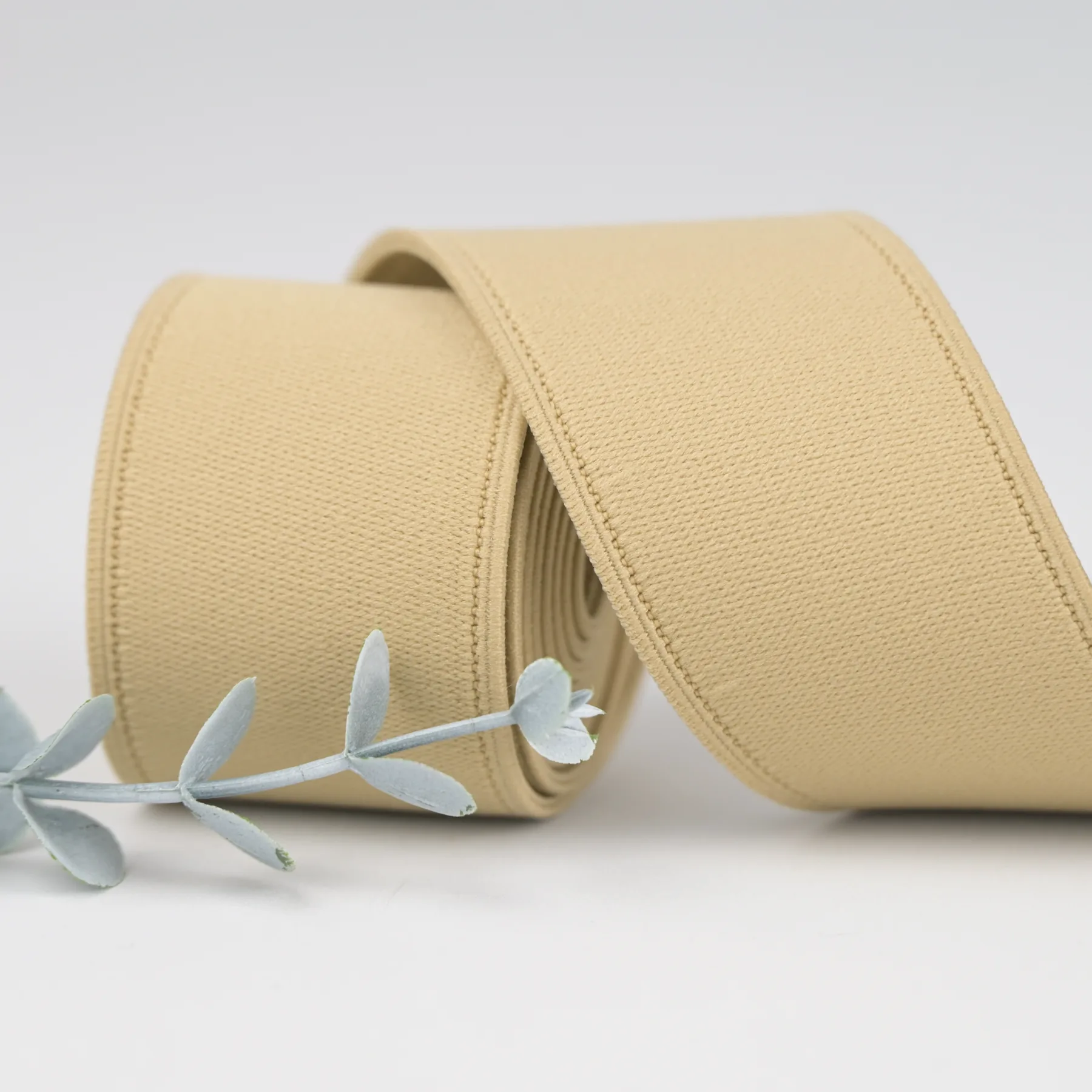
Garment finishing
Develop cuffs, necklines, bindings, edges and finishing details around recovery, hand feel, garment assembly and the appearance required after care.
Garment-edge performance
A trim must work with the shell fabric, seam and garment shape. Width or colour alone does not predict how a neckline, cuff or binding will behave.
Define the opening, edge or panel position and the recovery needed to hold shape without creating pressure, flare or distortion.
Describe rib, knitted tape or binding direction together with softness, body, stretch direction, thickness and face or reverse requirements.
Review seam, needle, stitch, differential feed, washing and heat because the finished assembly determines edge appearance and recovery.
Relevant product directions
Compare the product directions most often reviewed for this application, then confirm the construction against your actual assembly and use conditions.
Rib-knit and narrow textile accessories for garment finishing.
View Product →
Soft knitted trims with solid, striped and geometric directions.
View Product →Elastic tapes developed for apparel, activewear and accessory applications.
View Product →Inquiry checklist
Connect the trim specification to the garment pattern and assembly so the supplier can review fit, appearance and manufacturability together.
Buyer resources
Use these guides to prepare the technical and commercial information a supplier needs before sampling.
Buyer questions
Start with the garment position, opening dimensions, shell fabric and required recovery. Then compare structure, thickness, hand and sewing behaviour in the intended assembly rather than approving the trim loose.
Fabric weight, stretch and seam construction affect gathering, flare, pressure and recovery. A trim can appear correct alone but behave differently once sewn to the production fabric.
Review dimensions, shape recovery, colour, seam appearance, edge curl, hand and compatibility with the shell fabric using the care conditions intended for the finished garment.
Send the garment drawing, trim position, relaxed dimensions, shell fabric, seam reference, colour, quantity and care conditions before sampling.