
Extension and Recovery
Define how the garment must fit and recover, the direction of stretch and the extension range that matters in actual wear.
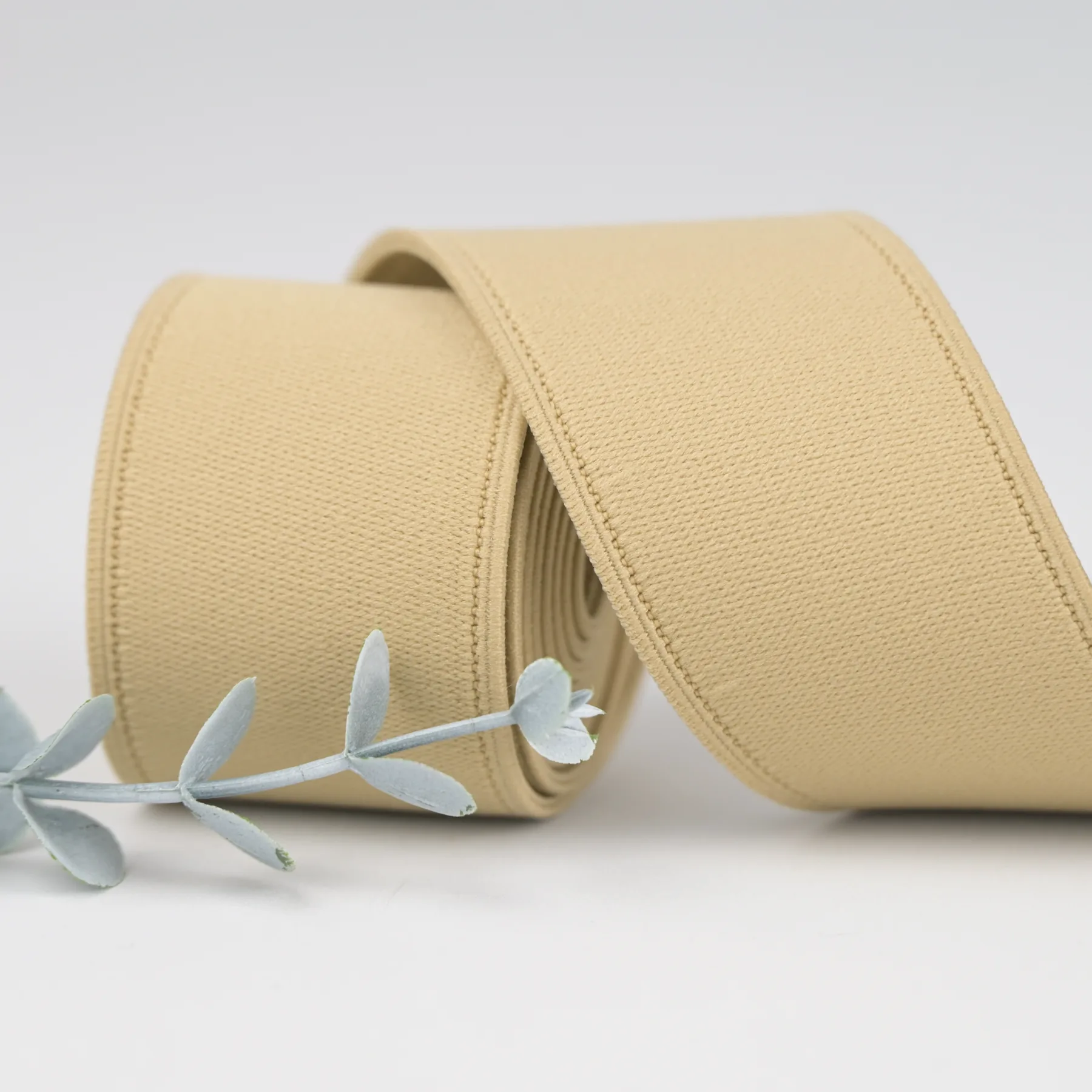
Activewear and intimates
Build the elastic brief around movement, recovery, skin contact, sewing and care instead of choosing by appearance or a single stretch number alone.
Performance in the finished garment
Elastic behaviour changes with construction, extension level, seam, fabric and repeated use. Sample review should reproduce the intended garment assembly.
Define how the garment must fit and recover, the direction of stretch and the extension range that matters in actual wear.
Describe softness, edge pressure, surface texture and whether the elastic is exposed, enclosed, brushed or worn directly against skin.
Review needle, thread, stitch, seam allowance, heat and care conditions because assembly can change the behaviour of the finished band.
Relevant product directions
Compare the product directions most often reviewed for this application, then confirm the construction against your actual assembly and use conditions.
Elastic tapes developed for apparel, activewear and accessory applications.
View Product →
Soft knitted trims with solid, striped and geometric directions.
View Product →Rib-knit and narrow textile accessories for garment finishing.
View Product →Inquiry checklist
Use the finished garment and its risk points to define the sample rather than treating elastic as a generic commodity.
Buyer resources
Use these guides to prepare the technical and commercial information a supplier needs before sampling.
Buyer questions
The correct range depends on garment pattern, body fit, elastic construction and sewing. Define the working extension in the finished garment and compare recovery after repeated extension rather than approving only a maximum stretch figure.
Needle penetration, stitch density, seam tension and heat can affect extension, edge curl and recovery. A band that looks acceptable loose may behave differently after it is attached to the production fabric.
Not automatically. The products may differ in pressure, moisture, repeated movement, care and skin-contact expectations. Keep a shared platform only where the finished-garment trials support it.
Share the garment, waistband or trim position, relaxed size, expected extension, fabric, sewing method, care conditions and quantity for a practical review.