
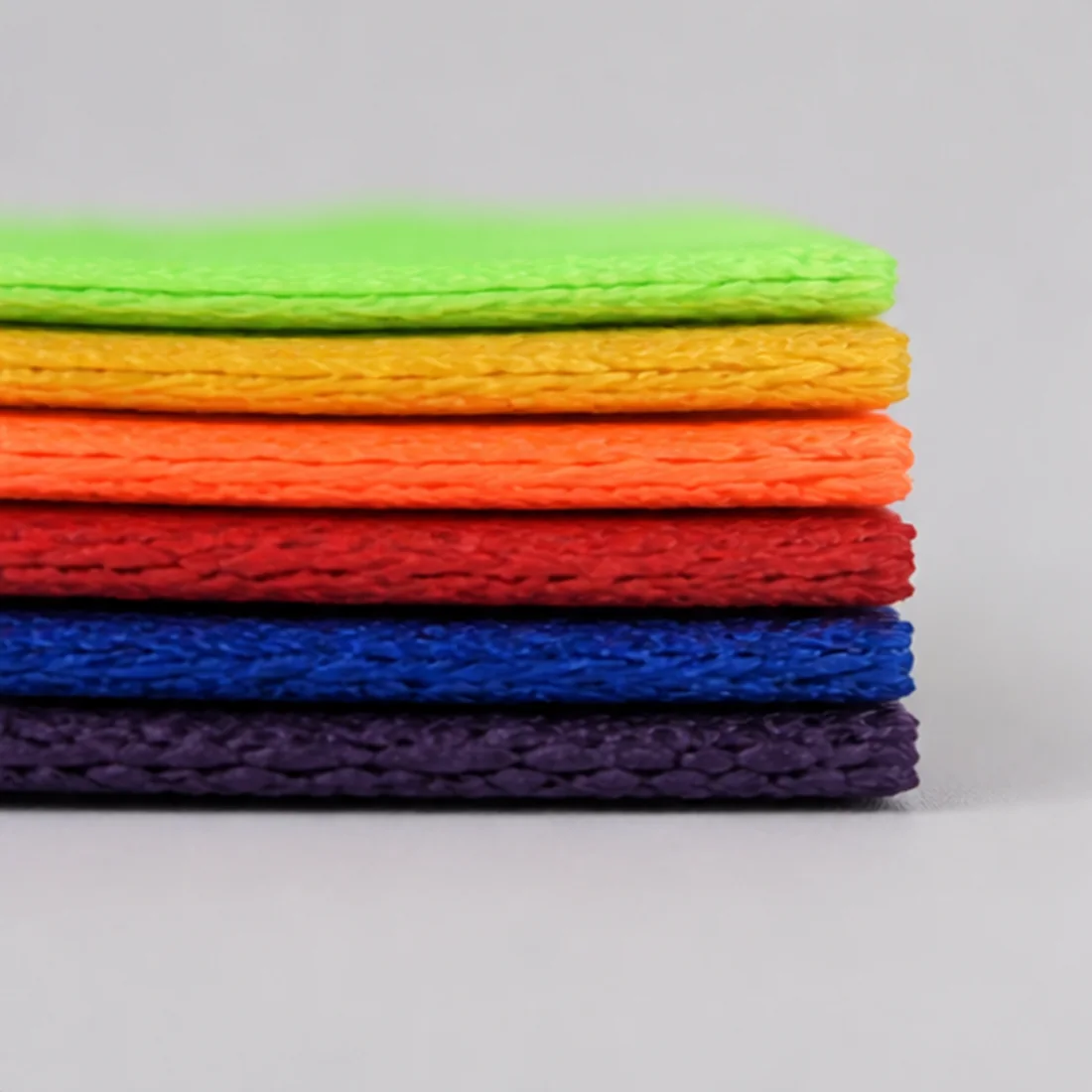
01Define the Product Decision Before Choosing a Force Number
A breaking-force result is useful only when it answers a defined decision. A buyer may be comparing two constructions, confirming an approved sample, releasing a production lot, investigating a field failure or validating a sewn strap assembly. Each decision can require a different specimen state, sampling plan and acceptance rule. Writing only “tensile strength: 1,000 N,” for example, leaves the method, width, conditioning, statistic and failure mode unknown and can create results that look comparable but are not.
Start with the risk in the finished product. Is the tape decorative, a garment adjustment tab, a bag handle, a compression strap or part of a load-bearing system governed by another product standard? Identify the load direction and credible use, misuse, care and environmental states. The responsible product engineer or compliance owner should then derive the component and assembly requirements from the finished-product design, applicable regulation, product standard, brand protocol and validated risk assessment. There is no single responsible minimum for every webbing application.
| Decision | Test object | Question the evidence must answer |
|---|---|---|
| Material comparison | Finished webbing specimens from named constructions | Which option provides the required force-extension behaviour under the same method? |
| Sample approval | Production-intent webbing and finish | Does the proposed item match the approved technical requirement? |
| Lot release | Traceable specimens from the defined lot | Does this lot meet the agreed rule without hidden method changes? |
| Assembly validation | Sewn, looped or hardware-connected component | Where and how does the real system deform, slip or fail? |
Keep component testing and assembly testing as related but separate evidence. A strong tape can still fail at stitching, hardware, a fold or an attachment point.
02Choose a Method Written for the Material and Question
ASTM D6775-13(2024) covers breaking strength and elongation of textile webbing, tape and braided materials using a split-drum type specimen clamp. Its published scope also sets boundaries for width and maximum breaking strength. That makes it a more direct starting point for many narrow tapes than a method written for broad fabric. The laboratory still needs the licensed standard, suitable equipment and a specimen that falls within the current scope.
ISO 13934-1:2013 determines maximum force and elongation at maximum force of textile fabrics with a strip method on a constant-rate-of-extension machine. ISO 13934-2:2014 determines maximum force with a grab method. Strip, grab and webbing-specific drum-clamp methods do not constrain the specimen in the same way, so their numerical results should not be mixed into one historical series or treated as interchangeable. If a customer protocol names a fabric method for a narrow component, obtain written agreement on specimen preparation, applicability and reporting before testing.
- Name the standard number, edition or customer method instead of writing only “tensile test.”
- Confirm that the material type, width, expected force and extension behaviour sit inside the method scope.
- State whether the result is breaking force, maximum force, elongation at maximum force or another defined output.
- Keep a method change visible in comparison tables and approval records.
- Use a laboratory whose equipment and documented competence cover the selected method and force range.
03Identify the Specimen, Lot and Conditioning State
Traceability begins before the specimen reaches the tensile tester. Record buyer and supplier item codes, specification revision, construction, finished width, colour or finish where relevant, production lot, roll and sampling location. Mark the longitudinal direction and avoid taking every specimen from one short adjacent section when the sampling plan is intended to represent a lot. If a cut edge, coating, print, logo repeat or splice changes the specimen, record that condition rather than hiding it in an average.
Moisture history and conditioning can affect textile mechanical results. ASTM D1776/D1776M-20(2024) covers conditioning and testing when the test method requires it and addresses preconditioning where prior humidity exposure may affect moisture equilibrium. ISO 139:2005 defines standard atmospheres for conditioning and testing textile physical and mechanical properties. The purchase specification should name the governing practice, state whether specimens are dry, wet, as received, laundered, heat-aged or otherwise treated, and preserve the treatment record. Results from different states belong in separate rows.
| Identity field | Why it matters | Minimum record |
|---|---|---|
| Item and revision | Prevents comparison with an obsolete construction | Buyer code, supplier code and approved revision |
| Lot and roll | Connects results to production and corrective action | Lot definition, roll numbers and sample positions |
| Specimen state | Moisture, care or ageing can change behaviour | Conditioning practice, treatment sequence and test state |
| Width and visible features | Edges, repeats and finishes can affect preparation | Finished width plus any relevant pattern, coating or splice note |
A report that cannot be linked to the submitted material and its state cannot reliably release a production lot or support a repeat order.
04Control Gripping, Loading and Result Validity
The gripping system is part of the method, not a minor laboratory preference. Narrow, strong or smooth tapes can slip, concentrate stress at a jaw edge or be damaged by excessive clamping pressure. ASTM D6775 specifies a split-drum type clamp for its covered materials. A different jaw face, wrapping path or clamping system may change how load enters the specimen. Record the actual clamp and loading arrangement and do not accept a substituted setup simply because the machine produced a number.
The test record should preserve the settings needed to reproduce the run: specimen preparation and width, gauge arrangement, rate of extension or other controlled rate, pretension when the method calls for it, force range and data endpoint. Values must come from the applicable method or customer procedure, not from a generic blog. Before calculating an average, review each trace and failure location. Slippage, a break caused at the jaw, cutting by a grip edge or a machine-range problem may make a result invalid under the governing procedure and should trigger the specified retest rule, not quiet deletion.
- Photograph or identify the clamp, wrapping path and specimen before the first approval series.
- Record slippage, visible jaw damage, edge cutting, progressive yarn failure and final break location.
- Keep excluded results with the reason and replacement specimen link in the raw record.
- Use the same approved method and setup for supplier, third-party and repeat-order comparisons.
- Investigate systematic differences between laboratories rather than averaging incompatible data.
05Read Force, Elongation and Variation as Separate Outputs
Breaking force and elongation do not describe the same behaviour. Force indicates the measured load at the defined event; elongation describes the extension relative to the method’s reference length and endpoint. ASTM D6775 notes elongation as an indication of a textile material’s ability to absorb energy, but elongation alone is not an energy calculation, comfort rating or proof of repeated-load durability. A high breaking value also does not tell a buyer how much the strap stretches at a normal working load.
Require the individual specimen values, the stated summary statistic, units and number tested. Ask for the force-extension curves when the shape, yield, working extension or progressive damage matters. Do not convert a whole-webbing result into force per millimetre of width unless the governing specification explicitly defines and validates that normalization; two constructions of different widths may distribute load differently. Likewise, a mean can pass while an unusually low specimen signals sampling, construction or process variation that deserves investigation.
| Reported output | Buyer interpretation | Common mistake to avoid |
|---|---|---|
| Breaking or maximum force | Load at the method-defined endpoint | Calling it an application-safe working load |
| Elongation at the named event | Extension under the method definition | Treating it as recovery or permanent set |
| Individual values and variation | Consistency of the tested specimens | Reviewing only an average or pass/fail word |
| Failure location and trace | Whether the setup and failure were credible | Accepting jaw damage or slippage without review |
Use the exact terminology and endpoint from the selected method. “Tensile strength” is often used casually but may hide whether the report means force, stress or force per unit width.
06Validate the Sewn and Hardware-Connected Assembly Separately
Webbing normally enters a system: it is folded into a loop, sewn to shell fabric, routed through an adjuster, clamped by a buckle, bonded, knotted or attached to a cord end. The assembly can slip or fail below the component break, and the location can change after sewing, abrasion, laundering, moisture or repeated adjustment. Build production-intent specimens with the actual webbing orientation, cut-end treatment, fold, stitch pattern, thread, seam allowance, hardware, mating fabric and assembly process.
ISO 13935-2:2026 covers seam maximum force for straight sewn seams using a grab method. Its official scope shows why the geometry and test question must be defined: a straight fabric seam method does not automatically validate every curved bartack, box stitch, loop or buckle assembly. Use the relevant finished-product or customer procedure where one exists; otherwise create a controlled engineering method that states fixture, load direction, pretension, rate, cycling or preconditioning, failure categories and acceptance rule.
- Record webbing break, stitch rupture, seam opening, substrate tear, hardware break, pull-through and slippage separately.
- Measure relevant deformation or slip at a defined load when function can be lost before complete rupture.
- Test the weakest credible orientation, size and assembly variation identified by the risk review.
- Repeat the assembly validation after material, finish, thread, stitch, hardware or process changes.
- Never publish a component force result as a finished-product load rating without the required product-level evidence.
07Set Acceptance and Retest Rules Before Seeing the Data
The acceptance criterion should be written before testing. State whether every specimen must meet a minimum, whether a mean and individual floor both apply, how rounding works and what constitutes a valid specimen. Define the lot, sample size, selection method and action for an invalid result, a valid failure or an outlier. A laboratory should not invent the product requirement, and a supplier should not choose a more favourable statistic after seeing the measurements.
If buyer and supplier laboratories disagree, first compare identity, conditioning, equipment, clamps, specimen preparation, settings, calculation and validity decisions. ASTM D6775 cautions that commercial-shipment comparisons between laboratories require care and describes comparative testing using homogeneous material when practically significant differences occur. Preserve raw data and randomly assigned specimens from the same lot so the teams can investigate bias instead of arguing over two isolated certificates.
| Rule to pre-agree | What to write | Evidence at release |
|---|---|---|
| Acceptance statistic | Individual minimum, mean, range or other approved rule | Raw values and transparent calculation |
| Invalid test | Observable invalidity and replacement procedure | Original trace, reason and linked retest |
| Lot sampling | Lot definition, selection locations and quantity | Roll-level sample identity |
| Dispute path | Comparison protocol and decision owner | Same-lot split samples and setup comparison |
Do not retest repeatedly until a passing value appears. Separate a method-defined invalid run from a valid specimen that failed the requirement.
08Webbing Breaking Force Test RFQ and Approval Checklist
Place the test requirement in the RFQ and specification, not only in a final inspection email. Provide the webbing item and revision, intended application, load direction, method and edition, specimen state, lot definition, acceptance rule, assembly test and required report fields. Ask the supplier and laboratory to declare any method-scope concern, equipment limit or proposed deviation before samples are cut.
Approve a complete evidence package: traceable sample record, method and setup, conditioning or treatment log, individual force and elongation results, units, curves where needed, failure observations, validity decisions and photos of the component and assembly fixtures. Link the package to the approved sample and specification revision. Repeat testing at the stage justified by risk, customer protocol and change control rather than assuming that one development test covers every future lot.
- Item codes, specification revision, construction, finished width, colour or finish and intended application.
- Method number and edition, scope confirmation and any buyer-approved customer procedure.
- Dry, wet, as-received, laundered, aged or other specimen state plus conditioning practice.
- Lot and roll sampling, specimen direction, preparation, gauge setup, rate, pretension and clamp system.
- Breaking or maximum force definition, elongation endpoint, units, individual rule, statistic and rounding.
- Invalidity, retest and dispute rules, including raw traces and failure-location records.
- Production-intent stitch, loop, hardware or substrate assembly and its separate acceptance criteria.
- Change triggers for material, construction, finish, width, thread, stitch, hardware, process or laboratory.
09Frequently Asked Questions
What is a good breaking strength for webbing?
There is no universal value for every webbing. The required force must come from the finished product, load path, applicable regulation or product standard, brand protocol, safety factor and validated assembly. Name the test method and specimen state with the number.
Is webbing breaking force the same as tensile strength?
Not necessarily. Breaking force is the measured force at the method-defined break or maximum event. Tensile strength may be used loosely, or may mean force divided by an area or width. Use the exact method term, units and specimen geometry to avoid false comparisons.
Which ASTM method is used for webbing breaking strength?
ASTM D6775 specifically covers breaking strength and elongation of textile webbing, tape and braided materials within its stated scope and uses a split-drum type clamp. Confirm the current edition, scope and customer requirements with the testing laboratory.
Why did the webbing slip or break near the clamp?
The material may be difficult to grip, the clamp path or pressure may be unsuitable, or stress may be concentrated at the jaw. Review the governing validity rule, setup, specimen trace and failure location. Do not silently average an invalid run or change clamps without documenting the method deviation.
Does a passing webbing tensile test prove a bag strap is safe?
No. It describes the tested webbing under the named method. The finished strap also depends on stitching, folds, hardware, substrate, geometry, wear and use conditions. Validate the production-intent assembly under the applicable finished-product or engineering procedure.
10Continue From Guide to Specification
Compare the relevant product family and application page before sending your RFQ.
11Sources & further reading
Sources support the principles discussed; the final specification and test plan must follow the application and buyer requirements.
- ASTM D6775-13(2024) — Breaking Strength and Elongation of Textile Webbing, Tape and Braided MaterialASTM International
- ASTM D1776/D1776M-20(2024) — Conditioning and Testing TextilesASTM International
- ISO 139:2005 — Standard Atmospheres for Conditioning and TestingInternational Organization for Standardization
- ISO 13934-1:2013 — Maximum Force and Elongation Using the Strip MethodInternational Organization for Standardization
- ISO 13934-2:2014 — Maximum Force Using the Grab MethodInternational Organization for Standardization
- ISO 13935-2:2026 — Seam Maximum Force Using the Grab MethodInternational Organization for Standardization